
#50: Manny: Far, Far More Than Meets the Eye
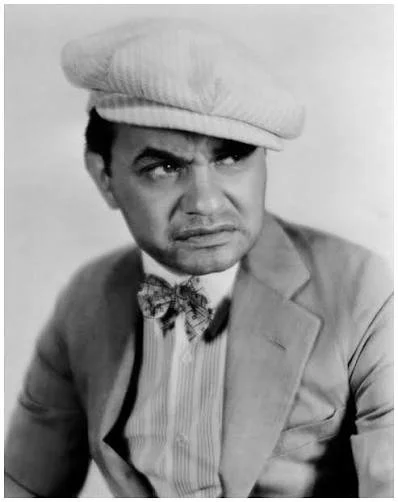
As Caesar Enrico “Rico” Bandello (1931)
During its first half-century, Hollywood studios had almost complete control over an actor’s name, biography, destiny, and frequently, even their public image. Although Edward G. Robinson (nee Menashe Goldenberg), a Romanian-born Orthodox Jew, was responsible for changing his name (the “G” was in remembrance of his family name), his public image was largely that of a hard-bitten, take-no-hostages, gun-toting gangster who spoke out of the side of his mouth. Although this image served him well through more than 115 films from 1916 to 1974 and an additional 30+ roles on Broadway, “Manny” was his own bipolar opposite. In truth, Manny Geldenberg was so gun-shy that when it came to firing a tommy in Little Caesar (the 1931 film that made him an overnight star), he couldn’t keep his eyes open; the problem was solved by having the makeup department tape his eyes open with transparent surgical tape.
Morris and Sarah Goldenberg already had 4 sons before Manny (Menashe ben Yeshayahu Moishe) was born in Bucharest on December 12, 1893. Before leaving for America some years later, a 6th son was added to the family. Although far from destitute, the Goldenbergs packed 9 people into a small apartment (Morris, Sarah, the 5 boys, and Sarah’s mother). Arriving at Ellis Island, the Goldenbergs moved into an apartment in the Bronx, and Manny, who would soon become bar mitzvah, began his American schooling. Already speaking Yiddish (his 1st language), Hebrew, Romanian, and German (the civil language in Romania at the time), Manny had little problem picking up English. In later years, Robinson could not recall ever having spoken English with any other than a “slight New Yorkish” accent. Upon arrival, his father first worked for a battery company, but soon bought into a candy store. The one lesson his father taught him that Manny would religiously follow for the rest of his life was “Always live beyond your means. That will make you work even harder.”
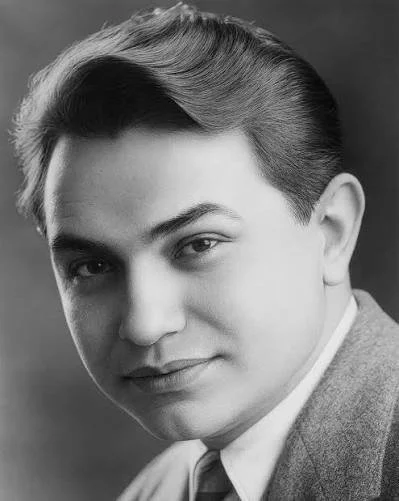
The Newly-Named Edward G. Robinson at Age 20
Manny began his education at PS 137, and then moved on to PS 20, a school from which such luminaries as George and Ira Gershwin, Jacob Javits, and Paul Muni also graduated. As a teenager, the young Goldenberg engaged in a bit of street-corner speechifying on behalf of liberal causes. It began to dawn on him that not only did he have a knack for public speaking, but that he could likely make a difference; help improve the human condition. While attending City College, he abandoned his father’s dreams of him becoming either a rabbi or a lawyer, and took up acting. Spotted by a recruiter from the prestigious American Academy of Dramatic Arts in 1911, Emanuel Goldenberg was awarded a scholarship. He began working in stock . . . but under the new name Edward G. (for Goldenberg) Robinson.
Many people believe that because Robertson was a New York actor who was also a native Yiddish speaker, he must have performed on 2nd Avenue - the “Yiddish Broadway.” In fact, he only appeared in a single Yiddish play, Rudolph Schildkraut’s Number Thirty-Seven, as a short-term replacement who had but a single line. He chose the name “Edward Golden” for this play, because it sounded far more Jewish than “Robinson.” (Rudy’s Schildkraut’s only son, Joseph (known as “Pepe”), would be one of Eddie’s longest and dearest friends, along with fellow Jewish actor Sam Jaffe. It is interesting to note that among the 3 biggest male stars on Warner lot in the 1930s - Paul Muni, James Cagney, and Edward G. Robinson - both Muni and Cagney performed in far, far more Yiddish plays than Eddie. (Despite his Norwegian-Irish heritage, Cagney frequently performed on Second Avenue, and in one of his early films (1931’s Taxi), Cagney had a scene in which he spoke fluent Yiddish).
In 1929, Manny, along with co-author Jo Swerling, wrote a Broadway comedy called Kibitzer. It would run for 120 performances (Feb. 18, 1929 - Jun. 1929) and put the Yiddish words kibitz and kibitzer into the compendium of American slang. Manny would never take up the pen again, although the rights to the play were sold to Paramount and made into a long-forgotten 1930 film starring Harry Green, Mary Brian, and Neil Hamilton. In the Broadway production, Robinson starred as Lazarus, a cigar-store owner on Amsterdam Avenue who feels life is passing him by. The character (played by the company member John Plumpis) tells his daughter and anyone else he can corner just how frustrated he is to be bursting with insight — backed not by hunches, but by “statistics,” as he puts it — all while lacking the few dollars it would take to demonstrate his genius to others. “That’s the tragedy of my life,’’ Lazarus declares early in the play. “No capital.”
(Swerling, who would become best-known for writing The Pride of the Yankees, It’s a Wonderful Life, Lifeboat and Guys and Dolls, also wrote the screenplay for an early Robinson comedy (to be directed by John Ford), The Whole Town’s Talking.)
Manny became an “overnight star” in his 10th picture, Little Caesar. From there he started making, on average, 4 films a year for Warner Brothers, becoming known for such classics as Five Star Final (1931), The Whole Town’s Talking (1935), Confessions of a Nazi Spy 1939), Dr. Ehrlich’s Magic Bullet (1940), Brother Orchid 1940), The Sea Wolf (1941), Double Indemnity (1944), Our Vines Have Tender Grapes (1945), The Stranger 1946), Key Largo (1948), The Ten Commandments (1956), Cheyenne Autumn (1964), and his last, Soylent Green (1973). In his 117 movies, Manny starred - or was featured - as a gangster, a bookkeeper mistaken for a gangster, an FBI agent chasing Nazis, a Norwegian farmer, a scientist, an insurance agent, a corrupt ship’s captain, and a Biblical figure. Few of his movies ever received a rating below 4 (out of 5) stars. He also made money hand over fist and was generally among the greatest box-office draws in the industry. He was that rarest of combinations: a great actor who was also a first-class movie star.
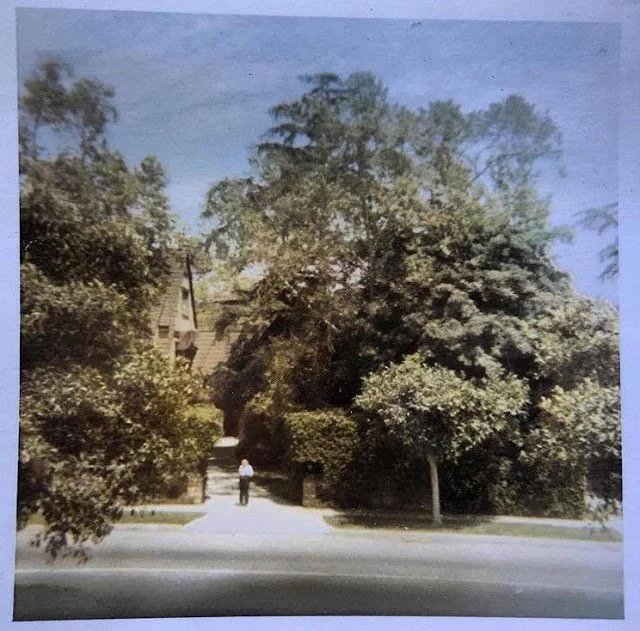
910 Rexford Drive, Beverly Hills (That’s Manny Stading in the Drive Way)
Manny never forgot his father’s sage advice to “. . . live beyond your means.” He did just that. Beginning with the first significant money he earned on Broadway, he began investing in art - paintings of the great masters, to be precise. Over the years - from Broadway to Beverly Hills - Manny purchased works such as Paul Cézanne's The Black Clock, Vincent van Gogh's Portrait of Père Tanguy, Grant Wood's Daughters of the Revolution, Edgar Degas’ Dancer Leaving Her Dressing Room, Henri de Toulouse-Lautrec’s Jane Avril Dasant, Paul Gauguin’s Horsemen on the Beach, Henri Matisse’s Dinner Table, and Amedeo Modigliani’s The Zoave and Portrait of a Woman. Eventually, he would be forced to sell many of his pictures and bronze pieces as part of his 1957 divorce settlement from his first wife, Gladys Lloyd. Over the next 16 years (Manny died on January 26, 1973), he did everything he could to restore his collection. But at its peak, Robinson’s personal art collection was likely one of the most extensive in the United States.
Of course, he needed a place to display his art. And so he commissioned architect Samuel Marx to build him his dream home, a picturesque Tudor-style mansion at 910 Rexford Drive in Beverly Hills. Just before designing the Robinson estate, Marx had completed his own masterpiece, the May Co Department Store at Fairfax and Wilshire Blvd. (Today, that building houses the Academy Museum of Motion Pictures.) For untold years, dignitaries from the worlds of academia, politics, the arts and sciences, when visiting Hollywood, could expect a handwritten invitation to come over to Manny’s home, where he would give them a special tour of his personal art museum. Of course, to build up such a superior collection of art meant a lot of traveling back and forth to the art capitals of the world. At least once - even twice - a year, Manny and Gladys (and then his second wife, Jane Adler Robinson) would go off to England, France, Spain, Germany, and Italy to purchase and then ship back home more masterpieces to adorn the walls of Rexford Drive. On occasion, when a new purchase did not seem to have an appropriate spot to be hung, Eddie (or Manny) would redesign and then rebuild a room to remedy the problem.
Far from being the gutter-raised, semi-literate meanie he portrayed in so many movies, Edward G. Robinson was an immaculately turned-out, well-read collector of artistic masterpieces and vintage wines who also possessed one of the film industry’s most fully developed social, civil and political consciences. His contributions - via speeches, appearances and hard cash - to causes ranging from anti-Fascism and equal rights to opening American borders to endangered European Jews would one day get him into a peck of trouble.
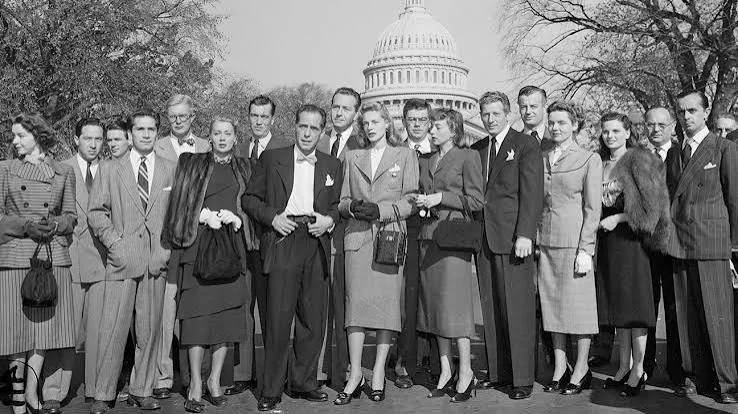
1947: The Committee for the 1st Amendment Invades Capitol Hill
Shortly after the close of WWII, elements within Congress and a growing right-wing movement put Hollywood actors, writers and directors in their crosshairs. Their claim: that Hollywood was filled with Commies, bent on inserting dangerous propaganda into their films and providing unlimited amounts of money in an attempt to take over the country. In addition to the House Un-American Activities Committee (HUAC) and the Tenney Committee, the popular name for the Joint Fact-Finding Committee of Un-American Activities directed by California State Senator Jack B. Tenney, the composer of Mexacali Rose and author of a series of Anti-Semitic books including Zion’s Trojan Horse and Zion’s Fifth Column. Opposing HUAC and the Tenney Committee were a Hollywood-based group called HICCASP - the Hollywood Independent Citizens Committee of the Arts, Sciences and Professions, and the Committee for the First Amendment. Hollywood’s 1940s version of antifa, its members included Humphrey Bogart, Charlie Chaplin, Ronald Reagan, Walter Huston and Edward G. Robinson.
(For those wondering how future POTUS Ronald Reagan could have been a leading member of this group when today he is best remembered for being an ultra-conservative Republican, remember that Reagan had no strong political convictions. He was, however, ambitious. Having been relegated to B pictures before the war, he yearned to be on the front line. He was also moving up the hierarchy, and SAG (the Screen Actors’ Guild) was led by the conservative George Murphy and the equally conservative Robert Montgomery. He chose their course, no doubt partly as a career move. When HICCASP refused to condemn Communism, Reagan was one of the first – and the most vocal – to leave. He openly criticized in detail the comments of those who stayed. Reagan gained sympathy for himself and his cause by advertising that he had been forced to seek police protection for his home and family because of death threats.
Among those who got into Reagan’s crosshairs was Manny. Reagan, along with the self-appointed “expert anti-Communist Hunter" Adolphe Menjou, made sure Manny was called and grilled on several occasions by the members of HUAC (including then-California Senator Richard M. Nixon). Always, the question was the same: “Are you now - or have you ever been - a member of the Communist Party?” Furious yet dignified, he refused to plead the Fifth, to “name names” of other supposed “Commie Pinkos” or engage in heated conversation as to whether or not the committee was infringing upon his 1st Amendment rights (i.e., Freedom of Speech/Assembly). As a result, Manny, a person who had always been at his best - or worst - an ardent New Deal liberal who gave unstintingly of his time, talent, and financial resources, found himself being “outed” in the pages of “Red Channels,” which carried the subtitle “The Report of Communist Influence in Radio and Television.” What seemed to bother ardent witch-hunters the most was that Robinson had sinned by being what they called a “Premature anti-Fascist.” Indeed, he made his first virulently anti-Nazi film, “Confessions of a Nazi Spy,” in 1939. Then too, he never hid either his love of being Jewish or his extreme hatred of all things Nazi.
Suddenly, the phone stopped ringing. Manny couldn’t find a role to save his life. To add even greater pressure and disconsolation to his life, his wife Gladys, who had long suffered from bouts of depression and schizophrenia, was now seeking - and not for the first time - a divorce, and his son, Edward G. (“Manny”) Robinson Jr., was already a juvenile delinquent.
But there was always his art, his newly acquired skill at painting, doing voiceovers on radio, and of course, the stage. In a sense, Broadway - aided by his friends playwright Paddy Chayevsky and Producer/Director Joshua Logan saved his life with a play entitled “Middle of the Night,” in which he starred as “The Manufacturer.” It would run for 477 performances between Feb. 8, 1956 (our mother’s 32nd birthday) and May 25, 1957. By the time the play concluded, he found himself invited to play the role of Dathan in one of the biggest hit films of all time: The Ten Commandments, directed by Cecil B. DeMille, and starring Charlton Heston as Moses and Yul Brynner as Rameses. It wound up being nominated for a remarkable 13 Oscars. Although he himself never received so much as a single Oscar nomination during his long career, Robinson did win an honorary award in 1973 for “Achieving greatness as a player, a patron of the arts, and a dedicated citizen . . . in sum, a Renaissance man.
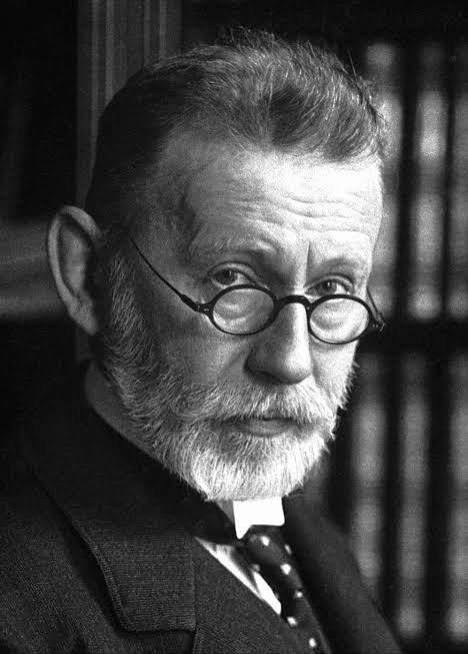
Dr. Paul Ehrlich
In the latter part of his life, whenever Manny was interviewed, he would naturally be asked which of all the movies he ever made was his absolute favorite. Without missing a beat, the answer would invariably be the same: Dr. Ehrlich’s Magic Bullet, originally released in 1940. This film, directed by William Dieterle from an Academy Award-nominated original screenplay by the then 34-year-old John Huston, Dr. Ehrlich’s Magic Bullet told the story of German biochemist Paul Ehrlich (1854-1915), who, among other things, created what eventually would come to be known as chemotherapy as he was in search of a drug that would cure syphilis. On the surface, this might not seem like great subject matter for a Warner Brothers film in 1940 - and for 2 reasons: first the subject of syphillis would be pretty much verboten in the eyes of that era’s censorship boards, and second, the underlying subtext of the medical community’s treatment of the Jewish Dr. Ehlich at the hands of that group’s inherent anti-Semitic feelings . . . and the fact that Ehrlich, who shared the 1908 Nobel Prize in Physiology or Medicine, had a highly loyal research staff made up of doctors and scientists who were anything but Aryan. Considering what was happening in Europe at the time this film was written, produced, and distributed, it is all the more remarkable. It goes without saying that this film was not screened in any town, city, or country under the control of the Third Reich. How much the more so the Brothers Warner deserve kudos for their bravery and what might be called their “cranky idealism.”
Even though Manny was definitely not a “Method Actor” (that school of acting had yet to be created or perfected), he prepared for his various movie roles as if he were Lee Strasberg’s finest disciple. He threw himself into Dr. Ehrlich - both the man and the scientist - perfecting his outer physical appearance and the zeitgeist of his particular place in time. Dr. Ehrlich was a remarkable man. In 1906, he prophesied the role of modern-day pharmaceutical research, predicting that chemists in their laboratories would soon be able to produce substances that would seek out specific disease-causing agents. He called these substances “magic bullets.” Ehrlich himself met with signal successes in the emerging fields of serum antitoxins and chemotherapy. Serum therapy was for Ehrlich the ideal method of contending with infectious diseases. In those cases, however, in which effective sera could not be discovered, Ehrlich would turn to synthesizing new chemicals, informed by his theory that the effectiveness of a therapeutic agent depended on its side chains. These “chemotherapies” were to be the new magic bullets.
In Frankfurt, Ehrlich turned from his work on serum therapy to chemotherapies and dyes. First targeting protozoa known to cause diseases such as sleeping sickness, he and the Japanese bacteriologist Kiyoshi Shiga synthesized a dye called trypan red as a highly effective cure for the disease. The researchers, now including an organic chemist, Alfred Bertheim, and a bacteriologist, Sahashiro Hata, broadened the targeted microorganisms to include spirochetes, which had recently been identified as the cause of syphilis.
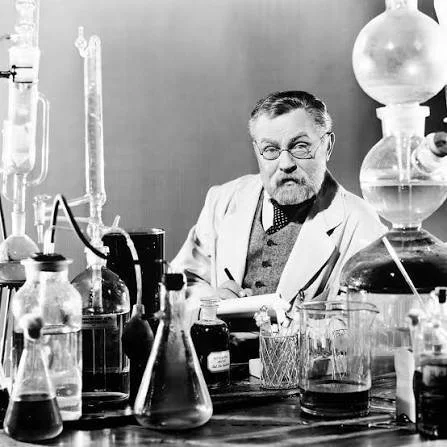
Manny Portrayhing Dr. Paul Ehrlich
Beginning with an arsenic compound, in three years time and 606 syntheses later—for that day an amazingly large number—they discovered Salvarsan (1909). Salvarsan was first tried on rabbits that had been infected with syphilis and then on patients with dementia associated with the final stages of the disease. Astonishingly, several of these “terminal” patients recovered after treatment. Additional testing revealed that Salvarsan was actually more successful if administered during the early stages of the disease. Salvarsan and Neosalvarsan (1912) retained their role as the most effective drugs for treating syphilis until the advent of antibiotics in the 1940s. The movie accurately reflects Dr. Ehrlich’s (Manny’s) arrest because some of the clinical test subjects died. The film clearly shows that each test subject volunteered their participation and was informed of the potential adverse events (bad side effects) that might ensue . . . today, the hallmark of standard ethical practice in all clinical trials - whether they be for drugs, medical devices, or procedures.
In both real life and the Warner Bros. film, Dr. Ehrlich was acquitted of any ethical, legal, or scientific wrongdoing. As a result of this - and his heavy workload - Paul Ehrlich's health rapidly deteriorated. During a cure in Bad Homburg, he died after a heart attack at the age of 61 on 20 August 1915. 32 years after Ehrlich’s death - and precisely 7 years after the film’s release- the so-called “Doctor’s Trial” concluded at Nuremberg. This famous trial considered the fate of 20 German physicians and 3 non-physicians who either participated in the Naxz program to euthanize persons deemed “unworthy of life” (the mentally ill, mentally retarded, or physically disabled) or who conducted experiments on concentration camp prisoners without their consent. The trial lasted 140 days. Eighty-eight witnesses testified, and almost 1,500 documents were introduced. Sixteen of the defendants charged were found guilty. Seven were executed. Between the reality of Dr. Paul Ehrlich’s research into a cure for syphilis. As a result of both Edward G. Robinson’s cinematic version of Ehrlich’s sterling achievement, and the findings of the Doctor’s Trial at Nuremberg, a new academic field was born: Medical Ethics. Henceforth, all medical/scientific research on human subjects would be carefully monitored to protect the integrity of procedure and the absolute safety, scrutiny, and foreknowledge of anyone participating in the various stages of medical study. For those of us who labor in this crucial field, we owe a tremendous debt of gratitude to Hippocrates, Dr. Paul Ehrlich, Edward G. Robinson, and judges Walter B. Beals, Harold L. Sebring, and Johnson T. Crawford.
Is it any wonder that Manny always considered Dr. Ehrlich’s Magic Bullet to be the high point of his professional career? With that one role, he bequeathed a lasting legacy to humanity. I urge anyone with an internet connection to watch the film (Dr. Ehrlich’s Magic Bullet)
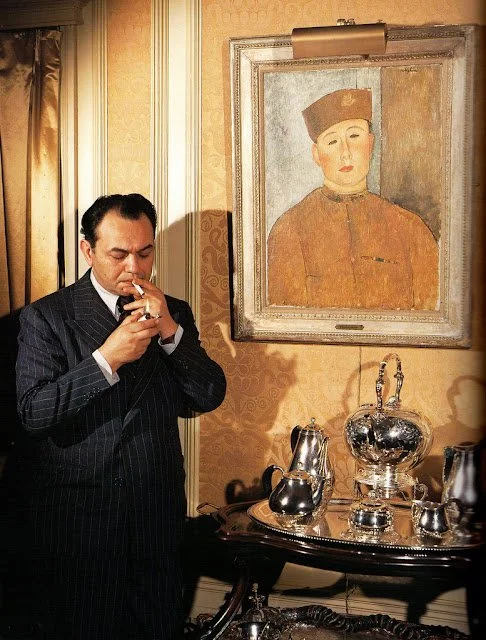
Manny and Modliani’s “The Zouave”
In Manny’s final film, 1973’s Soylent Green, a nightmarish futuristic fantasy about the controlling power of big corporations, he played detective Sol Roth, who is partnered with Thorn (Charlton Heston) to investigate a murder, apparently by a burglar. But of course, it turns out to be much, much more. During the shoot, Heston, knowing that Manny was dying, brought his costar a variety of wines and cheeses from all over the world each day Robinson was on set for his scenes, which were all shot first. Robinson died at age 79 on January 26, 1973, four months before the film's release in May 1973.
I find it very fitting that Manny’s last film turned out to be “much, much more” than what appeared on the surface. How emblematic, when one considers how much of a bipolar opposite the private Emanuel Goldenberg was to his public persona of Little Caesar. Far from being the punk, the gangster, or immoral ruffian he played so very often, Manny was a bespoke gentleman of the highest order; a man who knew his wines, had a great tailor, managed to assemble one of the finest private art collections in America, rellaxed at the end of a long day immersed in a tome from his fabulous library of first-editions, suffered in silence and made the world a better place. He really did live up to his father’s sage advice: "Always live beyond your means; it will make you work even harder.”