
#1,101: "Boz" Really Knew Trump -- Just Read Barnaby Rudge
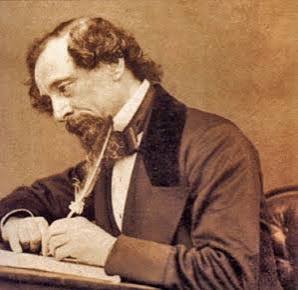
Charles Dickens (1812-1870)
In last week’s blog, we spent a bit of time with America’s greatest writer, Mark Twain, and getting acquainted with both his knowledge and understanding of the Jewish people. This week, being in the midst of reading through the Charles Dickens opus, we’re going to become acquainted with his description of America’s 45th and 47th POTUS. Before you ask, “What in the world do Twain and Dickens have in common?” I will answer in a few brief sentences:
Ever since I could first read, I have digested the oeuvres of the world’s greatest writers. Over many decades, I have read thousands upon thousands of hours reading the works of such stellar writers as William Shakespeare, Jean-Baptiste Poquelin (Molière), Fyodor Dostoyevsky, Sholem Aleichem, Sinclair Lewis, Upton Sinclair, Somerset Maugham, Franz Kafka, Gustav Flaubert, P.G. Wodehouse, Anthony Trollope, Phillip Roth, Sir Walter Scott, Charlotte Brontë and Charles Dickens (Boz) . . . to name but a few. I owe this love of literature to my maternal grandmother and mother, both of whom were inveterate readers.
Having recently worked my way through Upton Sinclair’s masterful 11-volume series of novels based upon the life and adventures of Lanny Budd, I have returned to reading the entire oeuvre of Charles Dickens (nicknamed “Boz”), which includes 15 novels (1 unfinished), 5 novellas, dozens of short stories, sketches, and around 200+ essays and journal articles. To my way of thinking, Boz was the greatest English-language novelist of all time. (Sitting right behind me in my library are his complete works in 20 volumes, published by “U.S.A. Books” more than 100 years ago).
Only 2 of Boz’s 15 novels were historical fiction: the second, A Tale of Two Cities (published in 1859), is set in London and Paris before and during the French Revolution. It is easily one of his best-known works, having been made into at least 7 motion pictures going all the way back to 1911. This initial version, which clocked in at a mere 30 minutes, starred Maurice Costello (a.k.a. “The Dimpled Darling”), the future father-in-law of John Barrymore. The most celebrated of the 7 films was, without question, MGM’s 1935 version, starring Ronald Coleman as Sidney Carton, Edna May Oliver as Miss Pross, and Basil Rathbone taking the role of Marquis St. Evrémonde — and produced by the 33-year-old David O. Selznick.
Dickens’ other historical novel was published in 1841 and is far, far less well-known: Barnaby Rudge (originally subtitled A Tale of the Riots of Eighty). This novel has never been all that popular with the reading public; the main reason being that the historical event in which the novel is set (The Gordon Riots of 1780) was never on a level with other famous religiopolitical events of the time. Simply stated, the Gordon Riots of June 1780 were triggered by intense anti-Catholic sentiment and opposition to the Catholic Relief Act of 1778 (also known as the Papists Act), which had slightly reduced government discrimination against Roman Catholics. In 1780, Lord George Gordon (1751-1793) — an eccentric and flighty longtime member of the House of Commons — led a mob to the Lower House to present a petition against the act. A week of rioting ensued. During the riot, hundreds of people died. Buildings were looted and burned. King George III called out troops to settle the rioters. (It should be noted that shortly before he died at age 42, Gordon converted to Judaism).
The riot became the most destructive and lethal urban rebellion in English history. This is the historical backdrop on which the 29-year-old Boz set his fifth novel. The Catholic Relief Act was not popular with everyone. My favorite character in the novel is the purely fictional “Old” John Willet, the proprietor of a tavern called “The Maypole,” located in a small village on the borders of Epping Forest in Chigwell, roughly twelve miles northeast of London. The tavern serves as the central gathering place for local regulars and is later ransacked by rioters during the Riots. Old John is a slow-minded dolt. When I first read Barnaby Rudge at age 11, I found Old John Willet’s introduction confusing as all get out; I had no one to compare him to. Upon rereading the novel again just this past week, Dickens’ description instantly reminded me of someone who has played a significant role in the life of our nation for more years than most of us care to consider: America’s “Fondling Father”:
The name of him upon whom the spirit of prophecy thus descended was John Willet, a burly, large-headed man with a fat face, which betokened profound obstinacy and slowness of apprehension, combined with a very strong reliance upon his own merits. It was John Willet’s ordinary boast in his more placid moods that if he were slow he was sure; which assertion could, in one sense at least, be by no means gainsaid, seeing that he was in everything unquestionably the reverse of fast, and withal one of the most dogged and positive fellows in existence — always sure that what he thought or said or did was right, and holding it as a thing quite settled and ordained by the laws of nature and Providence, that anybody who said or did or thought otherwise must be inevitably and of necessity wrong.
Like our Fondling Father, Old John is immensely sure of his intelligence and eloquence, and is usually surrounded by cronies who validate his opinions. He is emotionally abusive toward his adult son Joe, treating him as an impetuous child and demanding his silence. Although he is 20 years old and capable of heroic actions, Joe is constantly mistreated and infantilized by his father and the inn's patrons. Old John is incapable of standing up for his son — so much so that the young man runs off to join the army. Like our current president, he has few friends, speaks through a mouth filled with venomous put-downs, and for the most part is a lying, disreputable knave. His only saving grace seems to be that he serves up the best ale in Chigwell, long known as “Essex’s Golden Triangle.”
About the only difference between Old John and POTUS is that the latter isn’t known to be an inebriate; the former, being the owner of a tavern, certainly is. Other than this, they are like two peas in a pod: obese, obstinate, churlish, mendacious, self-centered, grossly impolite, and anything but a gentleman.
Now that the midterm elections have concluded and POTUS has gone back on his word about not challenging the results of so many Blue victories, we can begin thinking about 2028. I, for one, am going to be looking for not only the antithesis of Felon47, but of Old John Williets as well. I am looking for someone — anyone — who, in addition to being a gentleman, has enough knowledge, skill, wisdom, and ability to surround him/herself with people who have the class and spine to act as world-class advisors. I seek people of honesty and conviction — not people who have been convicted. I’m looking for people who place loyalty to the law far, far above loyalty to the leader.
In summing up Old John’s most sordid character afflictions, Boz was unknowingly spelling out the vast array of imperfections of a man who would put a horrific stamp on the world more than 175 years into the future:
“Men who are thoroughly false and hollow, seldom try to hide those vices from themselves; and yet in the very act of avowing them, they lay claim to the virtues they feign most to despise. 'For,' say they, 'this is honesty, this is truth. All mankind are like us, but they have not the candour to avow it.' The more they affect to deny the existence of any sincerity in the world, the more they would be thought to possess it in its boldest shape.
I highly recommend finishing 2026 by reading Barnaby Rudge, and getting to know the likes of Old John and his son Joe, who, despite all his father put him through, married Dolly Varden, the woman of his dreams, and remade himself into a man of character and accomplishment. And then, as we enter 2027, get to know Sidney Carton, the once dissolute barrister who eventually morphed into the greatest of all Dickens’ heroes in A Tale of Two Cities. For after so many years of putting up with the moral, intellectual, and political flaccidity of an Old Joe Willet, we deserve the valor and intrepidity of a Sidney Carton.
Copyright©2026 Kurt Franklin Stone