#47: One Less Hollywood Brat
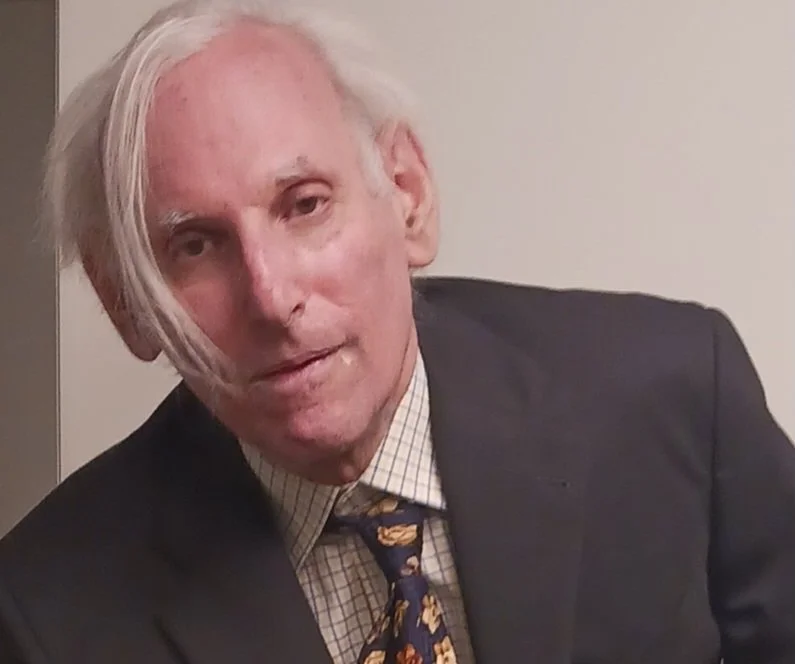
Alan Wald (1949-2026)
Recently, I received a call from a friend in Southern California; a call I knew would eventually come, but prayed with all my heart and soul would not. On the other end of the line was Lara Embry, the cousin of my oldest friend, Alan Wald, whom I have ofttimes mentioned and written about over the years. The purpose of Lara’s call was to inform me that Alan had passed away from Interstitial Lung Disease ILD), which had plagued him during the last years of his life. For those who have been reading Tales From Hollywood & Vine over the past 8 years, you may (or may not) recall that the very first paragraph of my very first blog (June 9, 2018), entitled, A Note of Welcome), mentioned Alan and his late father, the noted screenwriter Malvin Daniel Wald (1917-2008), and included a still capture of Alan and myself from the 1968 Clint Eastwood classic Coogan’s Bluff . . . in which we managed to snag some well-paid work as extras. (You will find that visual capture later on in this remembrance.)
Alan and I grew up within a mile or so of one another, but did not meet until early September 1961 - nearly 65 years ago. We first met in homeroom class, which, for us, was held in Mr. Ito’s garden shop (in those days, it was mandatory for boys to take a year of gardening). Because our last names were close to one another according to the alphabet, we would spend the next several years sitting side-by-side . . . whether in homeroom, chemistry (where we were longtime lab partners), literature, algebra, or any of a dozen or so honors-level classes. Our garden shop teacher was Mr. J.O. Ito, a former inmate of a Japanese internment camp. whose son, Lance, Ito (who was one year younger than us), would one day become the judge who presided over the O.J. Simpson case. During the 20 or so minutes of homeroom, we had the choice of reading, finishing up homework assignments, or working in either the garden (about 3 acres) or the greenhouse. Alan and I quickly decided to work in the greenhouse, where we took care of the carnivorous plants . . . Venus Flytraps and California Cobra Lilies. In any other place, we would have been considered odd, strange, or just plain nuts. But this was Southern California; most of our classmates were envious that we got there before them.
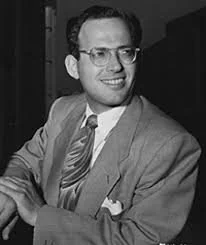
Malvin Wald (1917-2008)
Alan, like so many of our friends and classmates was a “Hollywood Brat.” Most of us came from families that made their living (whether as actors, writers, directors, publicists, agents, financial planners [my father Henry’s niche], or doctors) within the film industry. We were, in the main, children of privilege who had no idea we were all that different from other kids. We just knew that our folks (and some of us who were kid actors) worked very, very hard, took dance, music, acting, and swimming lessons, and even played little league baseball. Some of us - like Alan – were, unknowingly, the children of Hollywood royalty.
Shortly before his birth, Alan’s father, Malvin Wald, was nominated for an Academy Award for Best Screenplay. The movie The Naked City is, more than three-quarters of a century after its release, considered one of the greatest trend-setting police procedurals of all time. It also had one of the greatest, most instantly recognizable taglines of any film noir: “There are eight million stories in the naked city; this has been one of them.” Among Mr. Wald's 68 stories and screenplays were Al Capone, Have Gun Will Travel, Outrage (directed and produced by Ida Lupino, and coproduced by Malvin Wald), and the TV series Daktari and The Life and Times of Grizzly Adams. Malvin also wrote dozens upon dozens of brief essays based on his dealings with Ronald Reagan (during their WWII days at “Ft. [Hal] Roach, home of the “First Motion Picture Unit” of the U.S. Army Air Force), Mary Pickford, Humphrey Bogart, John Garfield and many, many others . . . all of which I now have in my computer files.
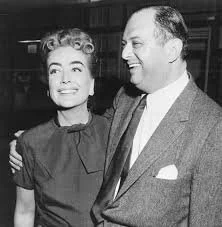
Jerry Wald (With Joan Crawford)
But it wasn’t just Malvin who gave the family its royal lustre. Malvin’s older brother Jerry, (1911-1962) was both a screenwriter ("Brother Rat," "They Drive By Night," "Peyton Place") and producer ("The Man Who Came to Dinner," "Key Largo," "Johnny Belinda” and "Mildred Pierce”. Jerry has long been cited as the real-life inspiration for the character "Sammy Glick" in the 1941 novel What Makes Sammy Run? written by Bud Schulberg . . . although Alan always denied it, claiming that his uncle “ . . . had not become enough of a ball of fire by then to warrant being fictionalized by Budd Schulberg . . . “
These were pretty much idyllic days; we rode our bikes to school, went to summer camp, delivered newspapers, and developed our own special skills and talents. Our flock of Hollywood Brats came from homes with large libraries, heated swimming pools, and neatly-trimmed lawns and gardens. Our teachers . . . many of whose names we can still reel off after so many years . . . looked forward to our clan entering their classes. From elementary school through high school we took the same honors (or “academically-enriched”) classes and literally ate up whatever we were taught. Alan was one of the brightest . . . and most articulate. But then again, what can one expect from the son and nephew of screenwriters/producers? Alan was the sort of person who, if you asked him what time it was, would tell you everything you needed to know about the company that made the watch. Oh, how he could go on and on! But wonderfully, the moment you told him you had to go, he would immediately say “Bye,” and part company, no hurt feelings.
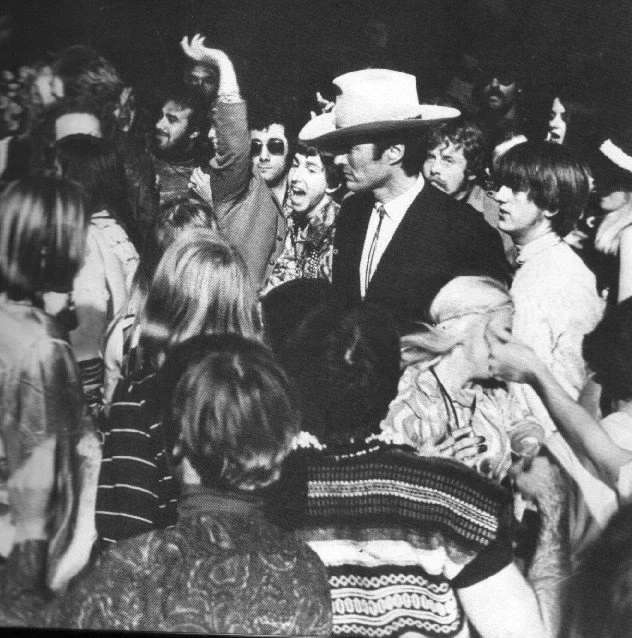
Cowlick Kurt in Front; Black-Bearded Alan Near Clint
One day in December 1968, we were both back home from our various universities. Alan asked if I wanted to go down to Universal Studios and make a few bucks playing extras in a movie called “Coogan’s Bluff.” Raiding our wardrobe closets, I picked out a woolly serape, and Alan a red-flannel major domo jacket complete with epaulets and a British navy cap. It looked like something straight out of “Sgt. Pepper’s Lonely Hearts Club Band.” Fortunately, the parts we were playing required us to have beards and long, straggly hair; we were to play hippies. In the film, Clint Eastwood plays the eponymous “Coogan,” an Arizona policeman (complete with cowboy boots and a ten-gallon hat) who has gone to NYC to fulfill the extradition of a murderer (played by Don Stroud). If this sounds a bit familiar, it should: Coogan’s Bluff planted the seed that would eventually become TV’s McCloud. In the picture just above and on the right, you can see the back of my head (really black hair with a large cowlick); I am adorned in the aforementioned serape. Alan is ahead of - and slightly to the left of - Clint Eastwood . . . he has a black beard. We were supposed to be dancing at a discotheque where the bad guy had taken shelter.
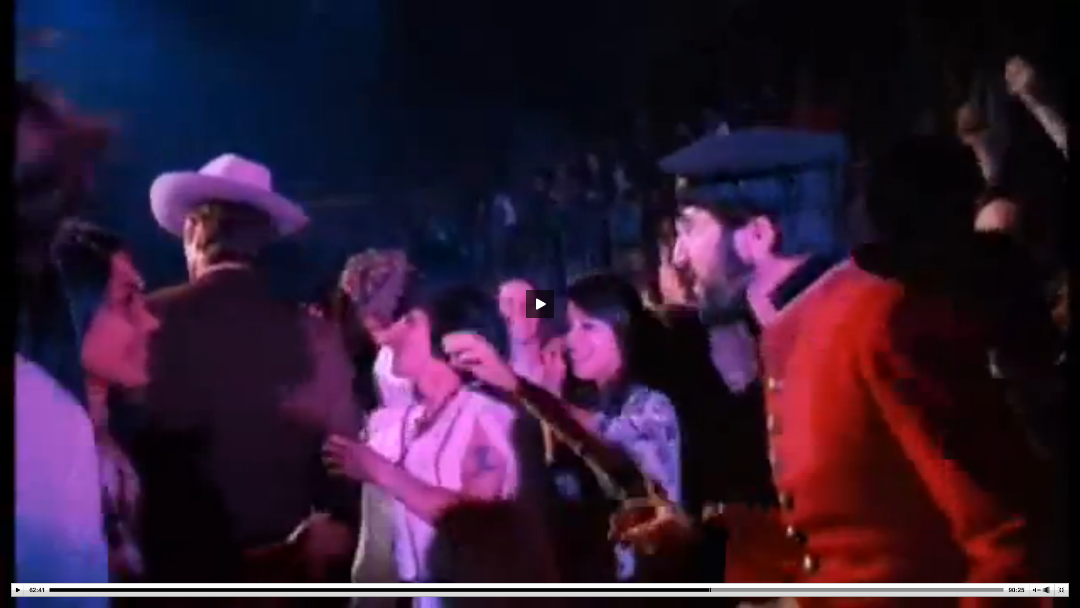
Me as “John Lennon”
During our lunch break, we sat out in the bullpen munching on sandwiches. Since Universal then - as now - had tons of guided- tours all over the studio, we could see folks on the other side of the chain separating the tourists from the bullpen, all straining to see if they would catch a glimpse of a star doing something as simple as eating lunch. At one point, we noted a long procession of the biggest, tallest sequoia-like humans we had ever seen. Who were they? They were members of the top-ranked Ohio State Buckeyes, in town to play the #2 Trojans of USC in the Rose Bowl. Part of their stay in Southern California was a tour of a movie lot. Suddenly, seeing them, Alan jabbed me in the ribs and said, “Let’s switch costumes!” “Why? I asked. ‘Because if you put on my jacket, you can pass yourself off as John Lennon!”
(I must admit, ever since the Beatles first came to world attention, people had told me of the similarity. Even today, when someone says, “You know something, you look a lot like John Lennon!” I will respond, “Sure, if he were nearly 80!” And so, bedecked in Alan’s jacket and cap, I started signing autographs! To this day, I‘ve got to believe that there’s at least one old geezer in the Midwest who firmly believes he has an autograph of the then 27-year-old Lennon. When we were called back in to continue filming, Alan wore my serape and I, his jacket and cap. At least we knew enough about movie making to swap physical spaces on the set; otherwise, we would have been edited out of the scene.)
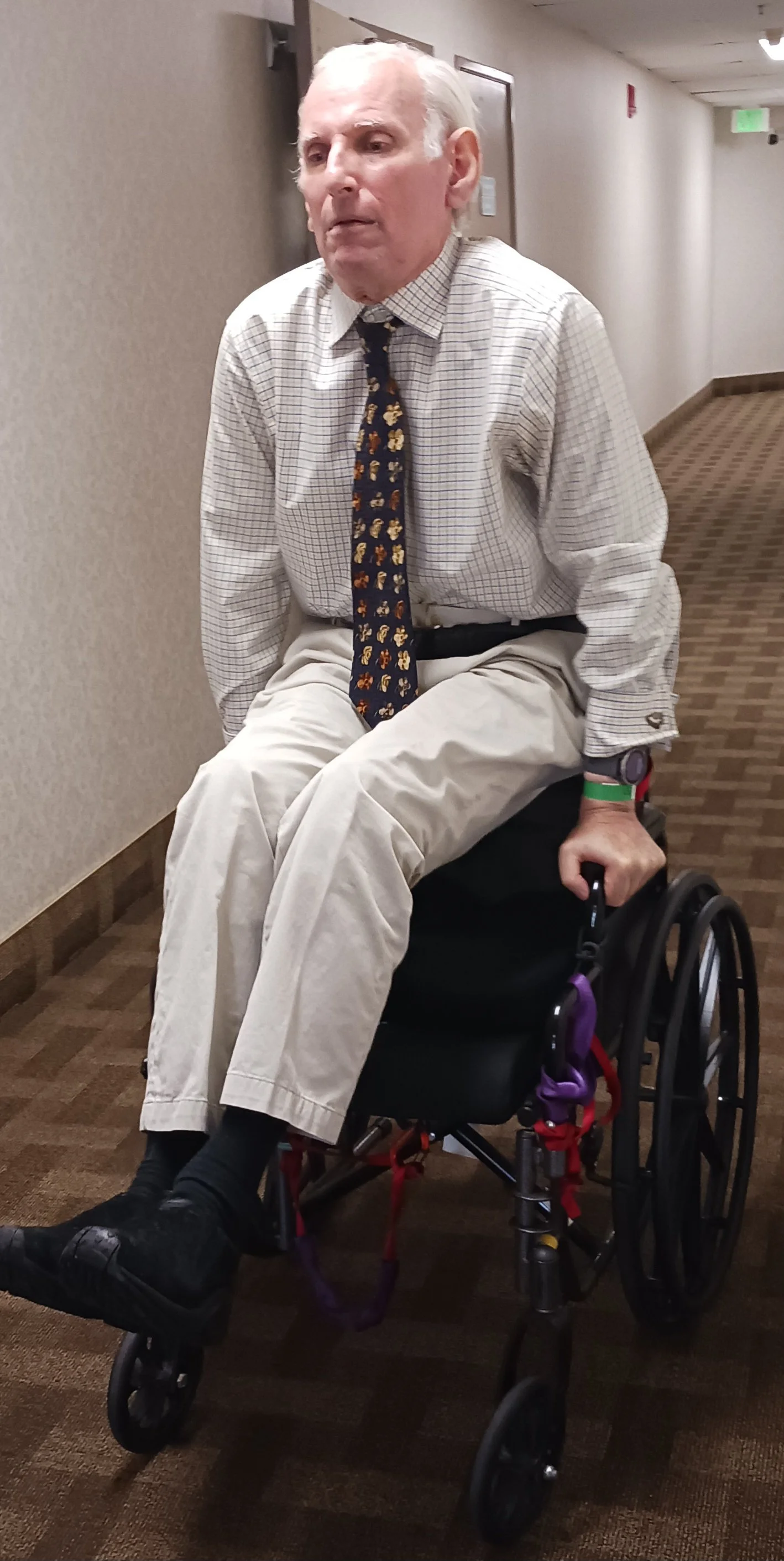
One of Alan’s Last Photos
Alan would eventually take degrees in some branch of microbiological science that I never understood. He also traveled all over the world, meeting people, climbing mountains and learning. The place he would speak of most frequently would be Nepal. Being a friendly, chatty sort, he managed to make friends wherever he went. When he would return home, he would live with his father at 4525 Greenbush Avenue . . . the first and only house he ever lived in. In the later decades of his life, he found work as an extra in numerous television shows. With a tall, gaunt, white-haired look, he was never out of jobs. He also spent years as my chief editor for both The K.F. Stone Weekly and Tales From Hollywood & Vine. Alan had a good, close eye for typos and mixed metaphors, thus vastly improving my assorted scribblings. (That task has now been vouchsafed to my wife Annie). In the near future, the name and look for this particular blog will be changed in his honor and memory. I’m thinking of changing the name to It’s Great to Be a Hollywood Brat. If anyone has a suggestion, please let me know.
I almost forgot to mention that Alan was political in a very unique way. Like most of our friends, we were raised in the era of the Hollywood Blacklist; both the director (Jules Dassin) and co-screenwriter (Albert Maltz) of The Naked City were blacklisted and had to leave the United States. Maltz himself was one of the “Hollywood Ten.” Alan neither worked in politics nor wrote for politicians, nor did much overt campaigning. What he did do, however, was just as important. Each election season we would go over my suggestions for candidates and incumbents I thought were really, truly, worth supporting. Alan then would start making contributions to their campaigns until he had maxxed out. He would also email me, “I maxxed out on so-and-so; who’s next on your list?” I cannot begin to estimate how much money he donated over the years.
It is terribly difficult to know that I will never hear Alan’s voice, share an email (my file has over a thousand of them going back years and years) or hear him spin a yarn about old Hollywood. Quite fittingly, the last time we were together, we spent the day at the Academy of Motion Picture Arts and Sciences on Wilshire Blvd., giving our ideas and suggestions for a permanent exhibit on the history of the Jews and the motion picture industry. By that time, Alan was frail, ambled about in a souped-up wheelchair, and still being a lover of all things Hollywood.
I feel honored - as do his many friends - for having had Alan Wald in our lives as long as we did. For him - as for most Hollywood Brats - the secret is in knowing that growing older is mandatory; growing up is purely optional. So long as Hollywood exists, Alan will be with us. I have a lifetime’s worth of Alan’s emails to go through, dozens upon dozens of Malvin’s stories, and memories which, to paraphrase Bogie in The Maltese Falcon, . . . are “The stuff of which dreams are made.”
Copyright©2026 Kurt Franklin Stone