#1,088: How Low Can They Go?
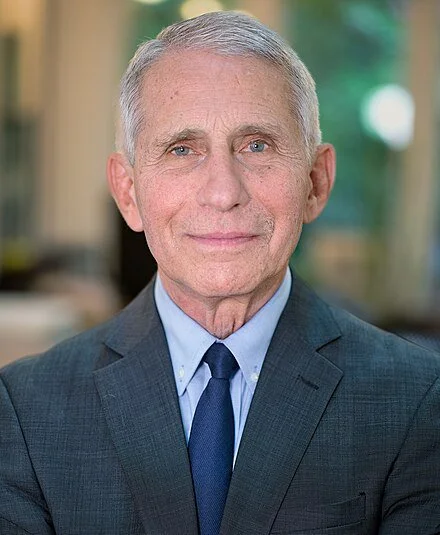
Anthony Fauci, MD (1940 - )
In just about every aspect, Anthony Fauci, MD, longtime (1984-2022) director of the National Institute of Allergy and Infectious Diseases (NIAID), was the best physician/medical researcher in the history of the United States. During his nearly half-century in the American public health sector, he acted as an advisor to every U.S. president since Ronald Reagan. As head of NIAID, Dr. Fauci made lifesaving contributions to HIV/AIDS research, the 2009 swine flu pandemic, the 2014 Ebola virus crisis, and the COVID-19 pandemic. Hauntingly, although IT was a member of the White House Coronavirus Task Force, established in late January 2020, Dr. Fauci did not meet with IT until three years after his inauguration as POTUS. And while America’s Fondling Father was making outrageous suggestions about how to treat COVID (such as using bleach), Dr. Fauci was hard at work conducting real medical research.
The recipient of nearly 4 dozen awards, including the 2008 Presidential Medal of Freedom (awarded by President George W. Bush), Dr. Fauci was also granted a preemptive pardon in January 2025 by President Joseph R. Biden, Jr., to protect the good doctor from what POTUS described as politically motivated and unjustified investigations and prosecutions threatened by the then-incoming Trump administration and congressional Republicans.
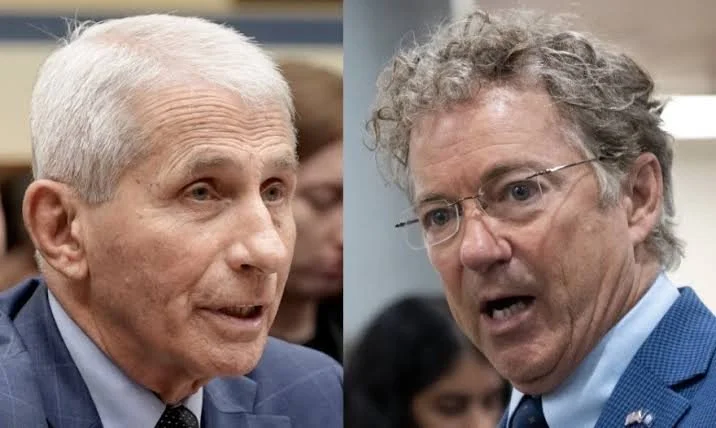
Dr. Fauci and Senator Paul
I believe a solid majority of the American people see Dr. Fauci as a professional’s professional; a physician who has long taken the Hippocratic Oath to heart in every imaginable way. And yet, of late, Congressional MAGA-ites and senior members of the regime have been building a case against him; urging that despite his preemptive presidential pardon, he be found guilty of “illegally” taking the Fifth and thus committing perjury before the Senate Homeland Security and Governmental Affairs Committee, chaired by Kentucky senator (and former ophthalmologist) Rand Paul. When one takes into account Senator/Dr. Paul’s occasional votes against issues near and dear to The Fondling Father’s heart, the Kentucky legislator’s contempt for Anthony Fauci seems to have nothing to do with him getting back into the good graces of the president. It does, likely, have everything to do with professional jealousy. How and why? First and foremost, when Dr. Paul considers Dr. Fauci, he sees a man who has near-universal respect from both the medical and scientific communities. Senator/Dr. Paul, on the other hand, suffers from a backstory about his medical board certification. In brief, Dr. Paul has long claimed to be a “board-certified physician,” but in truth, he isn’t certified by the respected, century-old American Board of Ophthalmology (ABO). Instead, he is “certified” by the National Board of Ophthalmology (NBofO), which he founded. He is president, his wife is vice-president, and his father-in-law is secretary.
In a 2010 statement to Politico, Paul described how his certification saga was his battle against a "hypocritical power play that I despise." Paul basically protested against the ABO's decision to require recertifications of medical licenses every 10 years for anyone who was board-certified after 1992. He fell into that group, found the decision to be "discriminatory," and took it upon himself to set up the National Board of Ophthalmologists (NBO). Paul was board-certified for around 10 years by the ABO until letting it lapse in 2005. So it turns out, this folderol may have nothing to do with politics, but everything to do with professionalism . . . and insecurity. Senator Josh Hawley (R-MO), another member of the committee, focused on documents released by Senator Paul, purporting to show that during the pandemic, NIH staff helped Fauci solicit nominations and ethics approvals for awards, including a $900,000 cash prize that he received. “You used federal employees so that you could go and get cash money,” Hawley said.
Citing thousands of pages of government records, Hawley and Senator Tommy Tuberville (R-AL) held Dr. Fauci responsible for school closures and lockdowns during the pandemic; accused him of enriching himself as people died; and even mocked his interactions with celebrities. Most significantly, they accused him of funding research that led to the creation of the coronavirus that causes Covid, and of lying about it under oath to Congress. And they threatened to hold him in contempt of Congress, saying he was not even eligible to invoke the Fifth Amendment because President Joseph R. Biden Jr. had granted him an unconditional pardon. It should be noted that while Senator Hawley is a graduate of Yale Law, Senator Tuberville is a former football coach (Ole Miss, Auburn, Texas Tech and Cincinnati) who knows as much about Constitutional issues as RFK, Jr. does about vaccines and autism.
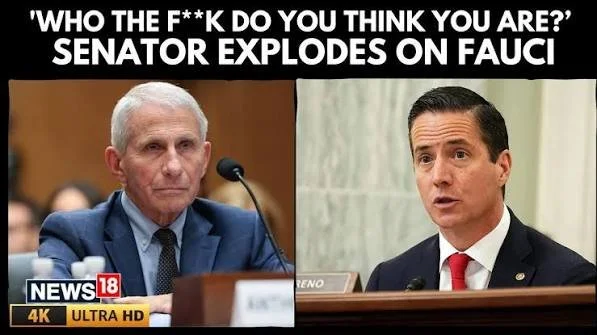
Sen. Bernie Moreno Lashes Out at Dr. Fauci
Then there was Ohio Senator Bernie Moreno (R-Ohio), who lobbed an expletive at Dr. Anthony Fauci during the Wednesday hearing about the origins of, and government response to, the COVID-19 pandemic. Moreno said he decided to run for office soon after learning that a woman was arrested at an Ohio middle school football game in 2020 for refusing to wear a mask, which was reportedly against the school’s policy at the time. Moreno, who defeated then-incumbent Democrat Sherrod Brown for the Ohio Senate seat in 2024, is best-known for being the former father-in-law of Ohio Representative Max Miller, who has been accused of viciously assaulting Moreno’s daughter. Moreno is so furious with Miller after holding his own counsel for several months that he has now called for Miller’s resignation from the House.
As angry and accusatory as members of the Republican congressional caucus are about Dr. Fauci’s having pleaded the Fifth about 110 times, virtually none seem to recall - or care - that their boss invoked his Fifth Amendment rights over 400 times in a deposition for his civil fraud case in 2022. A judge in that case stated in a motion appointing a court monitor to oversee the Trump family's businesses that Trump used the Fifth Amendment to refuse to answer questions over 400 times — a claim Trump's defense team did not appear to dispute When their guy takes the Fifth, it’s a constitutionally sound move; when a guy from the other party does so, it is a criminal offense for which he should be sentenced to life in Leavenworth.
During the hearings, Senator Paul released more than 1,000 pages of Dr. Fauci’s personal diary. The diary does not provide the smoking gun that Senator Paul is seeking. Rather, it echoes past disclosures showing Dr. Fauci wrestling with a fast-moving crisis as scientists’ views evolved. But it further inflames a polarizing political battle over the origins of the virus and how history should treat Dr. Fauci. Hey, let’s face it: tons of famous, not-so-famous, and otherwise accomplished souls have kept diaries throughout the ages. Ever heard of - let alone read - the diary of Samuel Pepys (pronounced “Peeps”), without whom no one would know the first thing about the Stuart Restoration in 17th-century England? (Sorry to be such an intellectual snob; I’m not terribly smart, but I just love to learn . . . ).
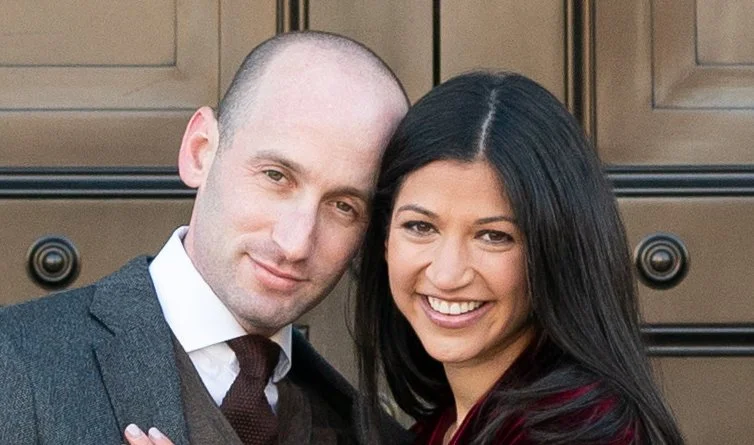
Stephen and Katie Miller
One of the most fascinating - and nauseating - aspects of the release of the Fauci diary involves Katie Miller, the wife of White House Deputy Chief of Staff Stephen Miller. It turns out that before calling for his imprisonment, Mrs. Miller and Dr. Fauci were actually on very friendly terms. Katie Miller, a former Trump administration official and current conservative podcaster, has, of late, been calling for Anthony Fauci to be jailed. How’s that? During President Trump’s first term, when Katie Miller was then-Vice President Mike Pence’s communications director and involved in the White House’s response to Covid-19, she appeared to be quite close with the director of the National Institute of Allergy and Infectious Diseases. Fauci provided regular medical advice to the Millers, counseling the family after Katie tested positive for the virus in 2020 while she was pregnant, when her husband had Covid-19, and when her newborn child had a medical episode. NOTUS (News of the United States) quoted the following diary entry: “I am calling Katie frequently to check on her a couple of times per day. She is very anxious about getting very ill since she is 10 weeks pregnant. Tonight she had an anxiety reaction. I calmed her over the phone,” Dr. Fauci wrote in his diary on May 9, 2020. Fauci wrote in another entry how he called the doctors treating Miller’s child directly, to discuss the baby’s medical care. Imagine that: a doctor making daily calls to check in on the health and progress of a pregnant woman who, in truth, was not even his patient. As a rabbi and medical ethicist, I cannot tell you how much time I’ve spent calling and chatting with people who were having medical, psychological, or spiritual woes and worries. Why would I do it? Because that is what a caring human being does. Today, Katie (who grew up within walking distance of Cleveland Clinic, Weston, Florida, where I worked for nearly 20 years), accuses Dr. Fauci of being a "narcissist" who "weaponized" her pregnancy and child "to aggrandize.” So: if I am to understand this properly, all those who keep daily diaries (myself included) are nothing more than narcissists. Oy! My mother, my sister and my wife would be shocked to learn this . . .
So what lies beneath this rush to humiliate, shackle, arrest and imprison a galaxy-class epidemiologist? Two words come to mind: COVER UP. I’ve got to believe that beyond Rand Paul’s professional jealousy, Josh Hawley’s deliberate misreading of legal history, Bernie Moreno’s lack of an off-switch, and Katie Miller’s stunning hypocrisy and need to significantly boost the number of people who subscribe to her podcast, there is the need to give Americans something other than the Epstein Files, the war in Iran, high gas prices, and POTUS’s frontotemporal dementia (naming just a few among tens of dozens of issues) keep Americans engaged . . . and far, far away from what really, truly matters.
It all brings to mind a slight reworking of a line in Chubby Checker’s 1962 hit Limbo Rock: “How low can they go?”
Dr. Anthony Fauci, M.D., does not deserve to be trashed in public. He has devoted countless decades to the service of humanity and earned the near-universal respect of physicians, scientists, and clinical researchers on all seven continents. Because of him, millions more people are living healthy, productive lives. Let the good doctor live out his well-deserved retirement (or for him, pretirement) with dignity and the deep thanks of a grateful planet. Dr. Fauci has always done his best to raise the bar of professional excellence in the service of humanity . . . even as they (and you know who they are) keep lowering it for your own psychopathic purposes.
There are a mere 93 days until the 2026 Midterm Elections.
Copyright©2026 Kurt Franklin Stone