
#1,074: Oh, and It's Alright, It's Alright, It's Alright
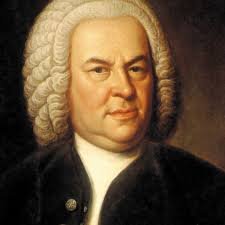
J.S. Bach
On January 19, 1977, the night before Jimmy Carter took the oath of office, thus becoming America’s 39th President, a strictly A-list pre-inaugural gala was held at the Kennedy Center in Washington, D.C. Among the performers rocking the house were the “alpha and omega” of world-class musical talent: Aretha Franklin and Paul Simon. For her part, Franklin tore the house down with her megawatt version of Irving Berlin’s “God Bless America.” Although Berlin wrote the song way back in 1918, it wasn’t heard in public until Kate Smith sang it on her number one most popular radio show on November 10, 1938. Aretha Franklin’s version had the pre-inaugural crowd jumping, stomping, and sweating.
By comparison, Paul Simon’s choice was a much quieter, more thoughtful, pensive - even prayerful - piece musically based on one of the greatest masterpieces of Baroque music: J.S. Bach’s sacred oratorio St. Matthew’s Passion (part 1, numbers 21 and 23, and part 2, number 54). Simon simply called it American Tune. It began with the words:
Many's the time I've been mistaken
And many times confused
Yes, and I've often felt forsaken
And certainly misused.
Oh, but I'm all right, I'm all right
I'm just weary to my bones
Still, you don't expect to be bright and bon vivant
So far away from home
So far away from home
The song, originally released in November 1973, has been a personal favorite of Simon and his vast fan base ever since. Rolling Stone has rated it as high as #262 on its list of “The 500 Greatest Songs of all time.” (Somewhat ironically, Aretha Franklin’s “Respect” came in at #1.) Upon his induction into the American Academy of Arts and Sciences in 2011, Simon chose "American Tune" as his song of induction.
Much of the power of “American Tune” is in Paul Simon’s voice. It does not ring with the loud anger that runs through our time. His guitar playing, like his voice is deceptively simple but truly complex; you try it. Let’s face it: Bruce Springsteen he is not. Bob Dylan, he is not... and never was. In American Tune, his only real protest song, his voice is mournful, as if unspooling in the candlelight of a day’s end, in the place where a person’s battles give pause until dawn. The song is searing in its tenderness, poetic in its indictment. It is political without being so. And its voices sound like truck drivers or factory workers, men and women who hustle for their daily bread while the world above them, the one of bankers and politicians, spins on indifferently.
For several years, of course, going back to his high school days when he and Art Garfunkel performed as Tom and Jerry, Paul’s voice was counterbalanced by Artie’s soaring, almost angelic, crystaline delivery. It’s hard to believe that at their peak, they were only together for 6 years (1964-1970) - 3 years before Paul wrote American Tune. (For those who have never understood why they broke up so many decades ago, I highly recommend former Los Angeles Times music critic Robert Hilburn’s definitive biography, Paul Simon: The Life. It will tell you all you want to know about 2 of the most successful, essentially private men in the history of the performing arts. This is not to say that they haven’t, very, very occasionally, teamed up for a night on stage. On September 19, 1980, Simon and Garfunkel played before more than half a million people at New York’s Central Park. A love album came out of that historic event; it included what I believe is the only time they performed American Tune together:
Throughout its history, America has refracted its patriotism and its protest in music, including “The Battle Hymn of the Republic,” the African American spiritual “Sometimes I Feel Like a Motherless Child,” Billie Holiday’s rendition of “Strange Fruit,” Bob Dylan’s “Blowin’ in the Wind” and Neil Young’s album “Living With War.” Back in 1973, Simon referred to American Tune as “My Nixon impeachment song.” In their book, “Songs of America,” Jon Meacham and Tim McGraw write that American history “is a story of promises made and broken, of reform and reaction — a story fundamentally shaped by the perennial struggle between what Abraham Lincoln called ‘the better angels of our nature’ and our worst impulses… Through all the years of strife, we’ve been shaped not only by our words and our deeds but by our music, by the lyrics and the instrumentals that have carried us through dark days and enabled us to celebrate bright ones.”
In American Tune, Paul Simon is far from sentimental; he is tired but resilient. He writes, When I think of the road we’re traveling on/I wonder what went wrong.” The American dream comes with both disappointment and loss. Each generation endures its sins and crises; its diminishment and cruel realizations. It is the job, though, despite the clamor and politics, that waits at first light with the hope of reward and the fear of resignation. American Tune, like Edward Bellamy’s Looking Backward (published in 1888), George Orwell’s 1984 (published in 1949) or Sinclair Lewis’ It Can’t Happen Here (1935) American Tune reads like it was written just last week (though Bach composed the music in 1728). It is a tune for the ages; even more about our current demented despot than Tricky Dick more than half a century ago. American Tune is the masterwork of a lyricist/composer on a par with Harold Arlen, the brothers Gershwin, Irving Berlin, Jerome Kern, Richard Rogers, Lorenz Hart, Frank Loesser, Bob Dylan, Carol King, Billy Joel, and Leonard Cohen . . . all of whom, in addition to be musically gifted to the max, happened to be Jewish. In American Tune, Paul Simon figures out how to make prophecy rhyme. He is one who firmly believes that regardless of the crises and fears of today . . . there will, G-d willing, yet be another and brighter tomorrow. Already, we are beginning to see a tightly bound package of evil beginning to unravel. I have to believe this is perfectly in keeping with the plaintive prophecy Simon wrote back in ‘73:
Oh, and it’s alright, it’s all right, it’s all right.
Copyright©2022, 2026 Kurt F. Stone


