Author, Lecturer, Ethicist

Filtering by Category: Israel/Zionism

#1,096: Say "Shehecheyanu"

Kurt Franklin Stone #1,096 Say Shehecheyanu

                    Fly Dubai: The Stuff of Miracles

More than half a century ago, a handful of students studying at the Jerusalem campus of Hebrew Union College put together and performed a satirical rewrite of West Side Story. They called it Upper West Side Story. It was one part Shakespeare (Romeo & Juliet) and several parts Jerome Robbins/Leonard Bernstein. One song I will never forget was called When You’re Dahti (a Hebrew word meaning “extremely Orthodox”) and was sung to the tune of “When You’re a Jet." It went, in part:

When you’re dahti you’re dahti all the way;
From your first brit milah (
circumcision) to the Kaddish (prayer for the dead ), they say.
When you’re dahti. you know just what to do,
There’s a prayer for your hat, and there’s one for your shoe...

For the most part, this last statement - about there being a unique and solitary prayer for every occasion - is absolutely true. In Jewish law and practice, there is one prayer or blessing for eating bread and another for eating fruit; one prayer for beginning chemo and one for recovering from illness; a blessing for doctors, one for getting up in the morning, and one for going to bed at night. Why, there is even a prayer for committing an act of martyrdom (called "keedush ha-Shem”) - the "sanctification of G-d’s name in public”).  

To the best of my knowledge, there is a single prayer that can be said in many different settings and for many different purposes.  It goes by the shorthand name shehecheyanu.  It is, if you will, the Jewish generic prayer of gratitude; a “Wow. This moment matters” kind of prayer.  It’s the blessing Jewish people say when we reach something new, special, or long-awaited. A holiday arrives. A baby is born. We move into a new home. We buy a new car or graduate from university. We recover. We finally finish the thing that felt impossible to finish. 

In Hebrew, it reads:      בָּרוּךְ אַתָּה ה אֱלֹהֵינוּ מֶלֶךְ הַעוֹלָם שֶׁהֶחֱיָנוּ מָנוּ וְהִגִּיעָנוּ לַזְּמַן הַזהַ     

Transliterated, it is Baruch atah, Adonai Eloheinu, Melech haolam, shehecheyanu, v'kiy'manu, v'higiyanu laz'man hazeh.

Its translation into English says: “Blessed are You, Lord our God, King of the Universe, who has kept us alive, sustained us, and enabled us to reach this season (or moment).”

Shehecheyanu: I cannot imagine a better way to express thanks and amazement over the saving of more than 170 lives on the Fly Dubai aircraft (a Boeing 737 Max) on its way from Dubai to Tel Aviv at the hands of a lone-wolf hijacker this past Wednesday, the 30th of September. Hauntingly, as first reported by much of the world’s press, the words “hijack” and “Muslim terrorist” were missing from most journalistic accounts. It took nearly 48 hours for print and online sources to begin ferreting out - and reporting on - the truth of what really happened:  

The co-pilot who launched the attack was an Omani national, according to Israeli Prime Minister Benjamin Netanyahu.  His name is Hamam al-Hammami. Speaking to Fox News, Netanyahu said that after the attacker was subdued on the flight, he called out to the crew, "Kill me, kill me!"

Hammami attempted to take control of the plane travelling to Israel, first attacking the FlyDubai pilot, Captain Smit Machchhar, a Hindu from a Gujarati Brahmin family, with a crash axe, according to the United Arab Emirates prosecutor general. After being injured, FlyDubai Flight FZ1073 from Dubai to Tel Aviv, carrying more than 170 people (of whom at least 150 were Jewish), plunged 17,000 ft two and a half hours into its journey, before passengers managed to overpower the attacker and successfully take control of the plane.

Captain Machcchhar, who saved the lives of more than 150 Jewish passengers, said he was lying on the floor injured when he realized the plane was sinking and he had to act, explaining: "I told myself to go for one last push to open the door from inside", which allowed the passengers in. Two reserve pilots then landed the plane safely in Saudi Arabia.

A crash axe is usually kept ​in the cockpit in case of emergencies. The weapon used has been a key question for investigators, given the stringent security on such a sensitive route. Early reports from passengers on board had suggested it might have been a knife.

What is truly remarkable is that no one died on the 3.5-hour flight from Dubai to Tel Aviv. A combination of factors, including having 2 additional pilots “deadheading” (riding in the cabin as passengers) aboard the flight. This is highly unusual; having two working pilots on board a flight is costly, and thus rarely done. But they wound up playing an important role, taking over for a wounded pilot and co-pilot, thus ensuring that flight FZ7103 would land safely in Tel Aviv. Then, too, being a flight bound for Israel meant that there would be dozens upon dozens of active and former members of the Israel Defense Forces (IDF) on board, and that among them would be emergency physicians and EMTs, not to mention experts in hand-to hand combat.

In an age when more and more people choose to scapegoat Israel and its citizens for the problems of the world, many forget just how well-equipped this tiny state is when it comes to emergencies requiring fortitude, bravery, and the ability to act heroically.

The great animus shown towards the Jewish State blinds much of the rest of the world to some hard truths: that Israel is frequently the first country to lend and send experts to places experiencing natural disasters and dangers; that Israel provides much of the world with new medicines, medical devices, and techniques; that when left to live in peace, Israel is capable of bringing hope to the entire planet.      

In closing, let us learn to say Shehecheyanu, v'kiy'manu, v'higiyanu laz'man hazeh.

 Copyright©2026 Kurt Franklin Stone
#1,087: Hatikvah ("The Hope")

Kurt Franklin Stone Hatikvah ("The Hope")

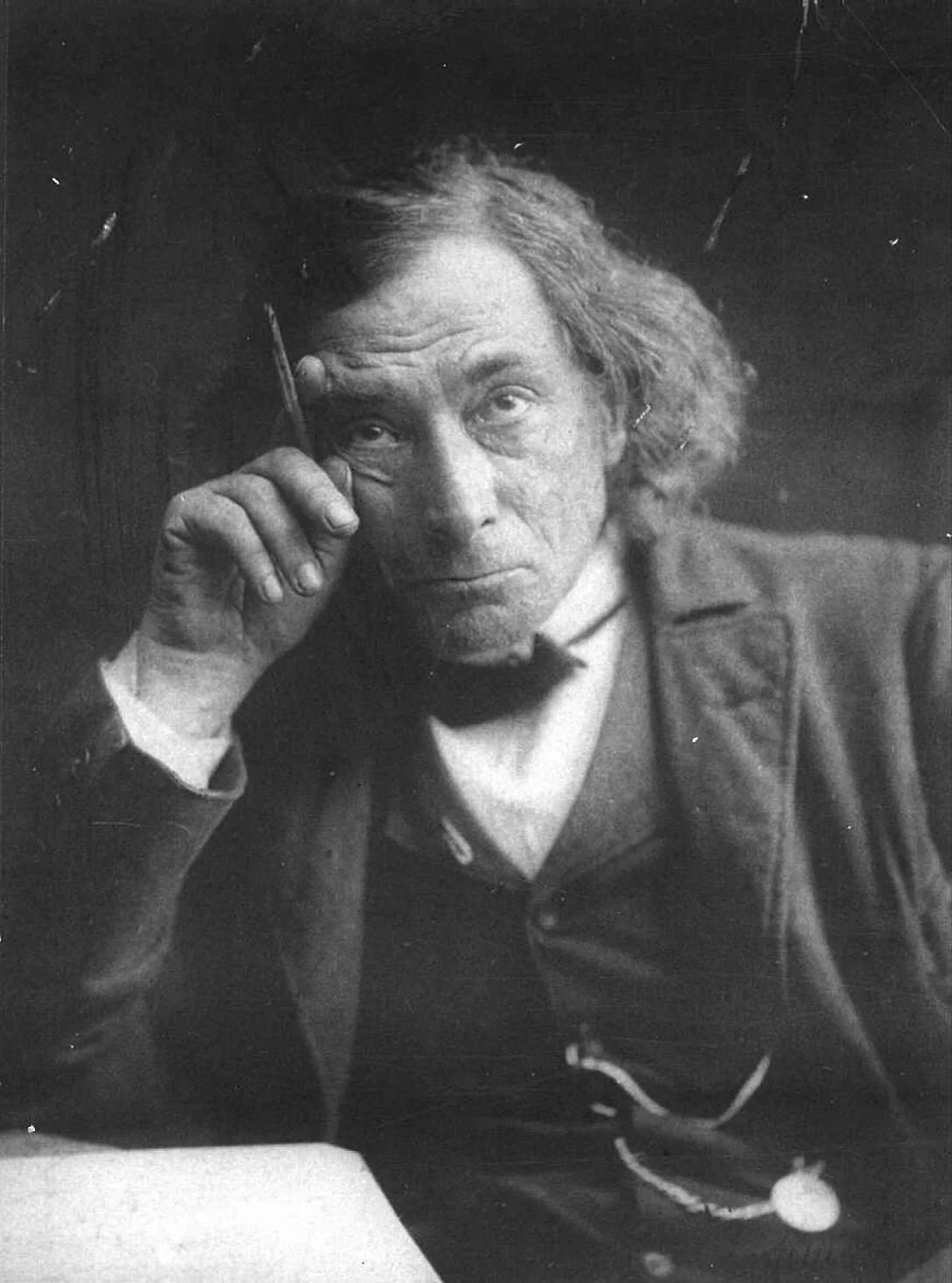
                   Naftali Herz Imber (1856-1909)

Generally speaking, whenever the interlocking terms Anti-Zionism and Anti-Semitism collide with the old prefrontal cortex, four world-class quote-meisters come to mind: Mark Twain, Oscar Wilde, Albert Einstein, and William Shakespeare:

  • Mark Twain: Never argue with stupid people; they will drag you down to their level and beat you with experience;

  • Oscar Wilde: There is no sin except stupidity;

  • Albert Einstein: The difference between stupidity and genius is that genius has its limits;

  • William Shakespeare: The fool doth think he is wise, but the wise man knows himself to be a fool.

 Zionism is the belief that the Jewish people have the right to self-determination in their ancestral homeland. Zionism has been a central tenet of Judaism for thousands of years. Connection to the Land is at the heart of Judaism, with its festivals tied to the agricultural seasons in the Land of Israel. Although most Jews were forcibly exiled from the Land of Israel after the Roman conquest in 70 CE, a significant number of Jews remained in the Galilee, writing the Mishnah in the 5th century CE. The Sanhedrin, the governing body of 70 rabbinic sages, functioned in the Galilee until the 3rd century CE. Although Muslims conquered Israel in the 7th century CE, Jews fought side by side with Arabs against the Crusaders, and some survived to still live in their Land. After the Spanish Inquisition, more and more Jews returned to their ancestral homeland to this day.

Anti-Zionism is the denial of the Jewish people’s right to self-determination in their ancestral homeland. Anti-Zionism perpetuates a subtle form of antisemitism that denies the indigeneity of Jewish people in the Land of Israel. Anti-Zionism is a virulent form of antisemitism. Antisemitic tropes in media result in violence against Jews worldwide. Anti-Zionism denies Jews their right to self-defense. Anti-Zionism denies the historical connection of the Jewish people to the Land of Israel. Anti-Zionism and its demonization of Jews lead to violence. Recent polling of 600 four-year US colleges by the University of Chicago found that “66% of Jewish college students understand the chant ‘Free Palestine from the River to the Sea’ means the expulsion and genocide of Israeli Jews. 62% of Jewish students report fear for their safety. Anti-semitism is cloaked in critiques of the Israeli government and its supporters, claiming they don’t have any issue with Jews; rather, their problem is with Zionists, a catch-all for anyone who supports the Jewish state. The vast majority of the global Jewish community are Zionists. Open and respectful debate are essential ingredients in fostering progress for all. Therefore, when discussing sensitive issues with colliding narratives, it is crucial to remove hate and misinformation from the conversation.

"When people condemn Zionists - they mean Jews. You're talking anti-semitism.” Martin Luther King.

To listen to folks go on and on about the unmitigated power of Jews these days might lead one to believe that the people of Abraham, Isaac and Jacob, Sarah, Rebecca, Rachael and Leah are engaged in a worldwide conspiracy. The fact of the matter is that on a planet inhabited by slightly less than 8.3 billion human beings, Jews make up no more than 16.5 million souls... about 0.2%. (Israel and the United States are home to the largest Jewish populations of 7.76 million and 6.30 million, respectively.  Believe it or not, Americans significantly overestimate the number of Jews living in the USA, according to a survey released a little over 4 years ago. Respondents guessed, on average, that 30% of the U.S. population is Jewish — a sum 15 times the actual proportion. It should be noted that in 1939, the core Jewish population reached its historical peak of 16.6 million.  By 1945, due to the murder of almost six million Jews killed during the Holocaust, this number was reduced to a scant 11 million.  

Unsurprisingly, the recent rise in Anti-Semitic hate crimes in the United States is the result of a complex and multi-faceted set of factors, and it started long before the October 2023 terrorist attack on Israel. Some factors that have been identified include: an increased tolerance for open calls for violence; a climate of polarization that perpetuates anger and “cancel culture;” a worldwide increase in nationalism; and social media, which provides an outlet with a worldwide audience for views to spread.  Keep in mind that there are significantly more Muslims than Jews in the world.  According to global demographic data from organizations like the Pew Research Center, the global Muslim population stands at approximately 2 billion people, making it the world’s second-largest religion and fastest-growing religious group on the planet.

Keep in mind that while a lot of Jewish people - whether they be culturally, religiously, gastronomically, or ethnically so - are not big fans of P.M. Netanyahu or the current state of Israeli politics.  I, like many Jews, have a fairly evolved understanding of Israeli political history; its mixture of multi-party British Parliamentarianism alongside a Turkish executive presidency that concentrates broad powers in the hands of the president, who serves as both the head of state and head of government. This means that although m’dinat Yisrael (“The State of Israel”) has had majority governments in the past, no single party has ever won an outright majority of seats in an election. As a result of this, every Israeli government (with the one historical exception occurring in 1969) has been a coalition, where multiple parties join forces to form a parliamentary majority (at least 61 of 120 seats in the Knesset (the Israeli legislature). To keep Netanyahu’s center-right coalition in power requires an unwieldy amalgam of religious nationalists and hard-core defense hawks, trying to work alongside politicians representing West Bank settlers, and a smattering of old-line socialists and the very rich.  

Sometimes it works; other times its teeters on the precipice. But, as the late Chief Rabbi of the U.K., Rabbi Lord Jonathan Sacks (1948-2020), notably said on more than one occasion, “In Israel, there is always hope.”

Indeed, Rabbi Lord Sacks’ pithy bit of brilliance and optimism is to be found in the very name of Israel’s national anthem: הַתִּקְוָה (Ha-tikvah “The Hope.”). There are nearly 200 official national anthems globally.  In the main, they serve as the musical counterparts to flags, primarily expressing internal unity, national identity, and patriotism. They celebrate a nation's unique character, history, and core values—such as resilience, freedom, and devotion—uniting citizens during ceremonies, sports events, and national holidays.  In countries that have experienced decades - even centuries - of relative peace, anthems express the natural beauty of the land and people being represented.  

As old - and young - as Israel (at various times called Judea, Palestine, Canaan, Ottoman Syria, Mandatory Palestine, and a host of others) was and is, its national anthem, הַתִּקְוָה (Ha-tikvah)is actually far newer than that of the United States.  Its roots trace back to an 1878 nine-stanza poem originally תִּקְوَתֵנוּ (tikvatenu - literally Our Hope) written by the Galician-born poet Naftali Herz Imber (that’s him in the photo above).  In 1882, Imber came to Ottoman-ruled Palestine as part of the First Aliyah, which occurred after pogroms ravaged Jewish shtetls, when Jews fleeing Eastern Europe, as well as Yemen, returned for the first time in hundreds of years to their homeland. When they arrived, they set up agricultural villages, the very first kibbutzim. Seeing the beginnings of these settlements inspired Imber to write his poem, "Our Hope." 

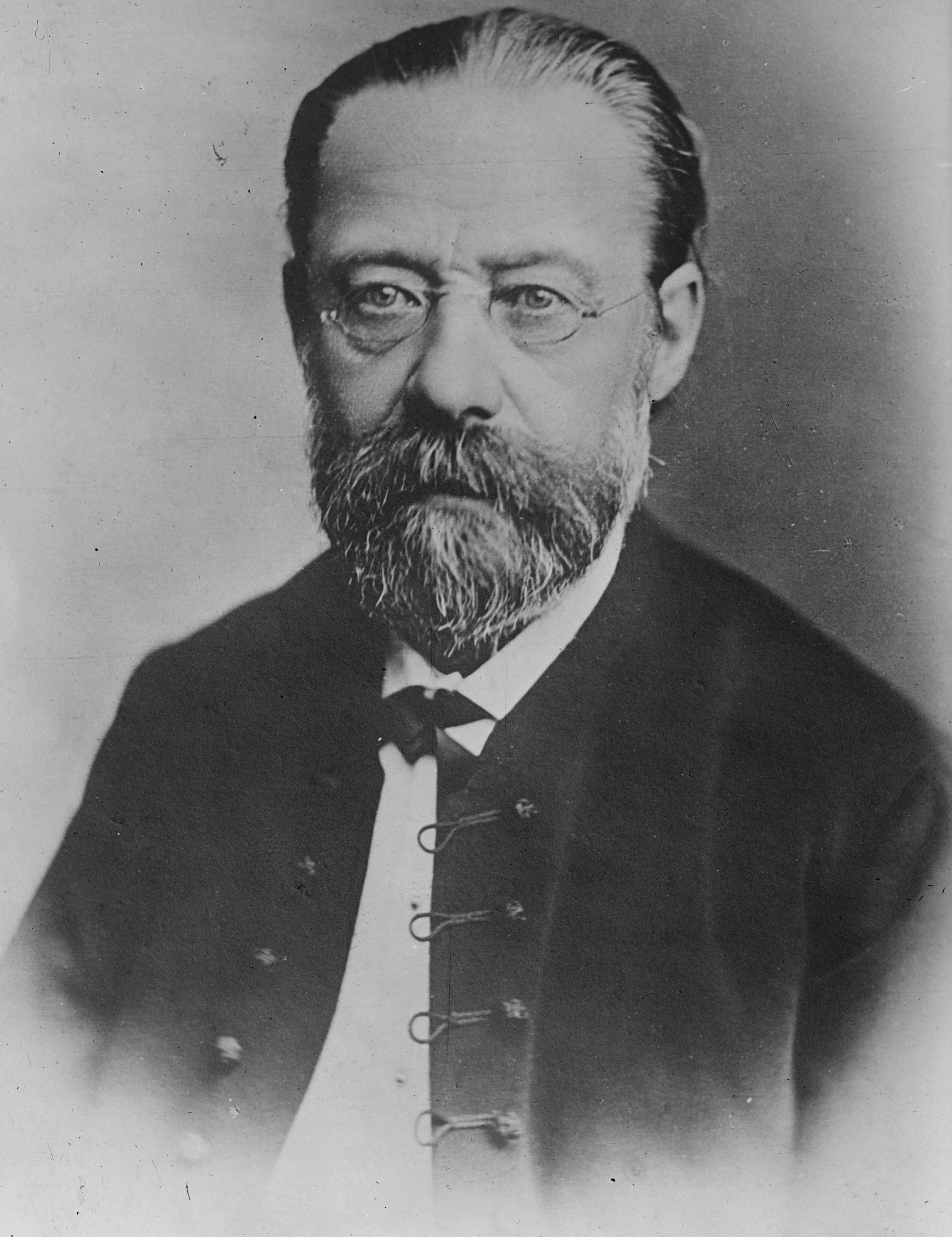
         Composer Bedřich Smetana (1824-1884)

Over time, the original poem was shortened to include only the first two stanzas, and a melody was added by Samuel Cohen, a composer from Romania who also arrived in Palestine during the First Aliyah. It was first publicly sung at the foundational First Zionist Congress in Basel, Switzerland, in August 1897. At 1937’s 18th Congress, held in Prague, it was officially adopted as the Zionist anthem. By then, it had been reduced by one line and sung to the Czech composer Bedřich Smetana’s symphonic poem The Moldau, which originally evoked the flow of Vltava (Moldau) River from its source in the mountains of the Bohemian Forest. Ironically, more than half a century after Smetana’s death (1884), the Nazis unsuccessfully attempted to ban the 10-minute piece from being played in public; they saw it the deeply patriotic music as a symbol of resistance and national pride against the 1939 German occupation of Czechoslovakia.  The 3rd Reich banned performances of the piece to crush the cultural morale and independent spirit of the Czech people.  Try as they might, however, they failed.

At this point, Israel, which is being assumed throughout much of the world as the perpetrator of genocide, needs all the tikvah - “the hope” - it can get. Understand the fact that Israel, including what the world refers to as the West Bank and Gaza, is 8,522 sq miles (roughly the size of New Jersey), while Muslim nations surrounding it with the same language, religion, and culture comprise 5,392,668 sq miles. 

This does not include Pakistan, Afghanistan, Iran, Indonesia, southeastern Europe, Turkey, etc. This would add another 3 million sq miles. It seems to me the question becomes not whether tiny Israel needs to divide half of what is left of Israel (about 4,000 sq miles) to a terror organization. The fact is that people occupying nearly 5.4 million sq miles are attempting to squeeze out the Jewish ancestral homeland; a land only ever a state under Jewish rule and which has had Jews residing in it for 3,761 years continuously. Do keep in mind that depending on how one measures the total area of Muslim land mass, it is anywhere between 600 and 1,300 times larger than Israel.   And a hefty percentage of these people lawfully living on approximately 5.4 million sq miles have as a major objective the destruction of virtually all the people living on a measly 8.522 sq miles. 

Is it any wonder that Israel’s national anthem is entitled Hatikvah?   

Copyright©2026 Kurt Franklin Stone