
1,093 MAGA: America's Most Dangerous Cult
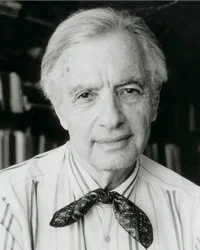
Robert j. Lifton, M.D.
Back in the ‘60s, when I was an undergraduate, I discovered, to my amazement, that, aside from writing a senior thesis, I had already fulfilled course requirements in 2 different majors: philosophy and American History. Searching for a 3rd major, I came across a recently published book by psychiatrist Robert J. Lifton titled Thought Reform and the Psychology of Totalism: A Study of Brainwashing in China. Although, as the title indicates, Dr. Lifton’s 500+ page work was about Chinese Communist thought reform, it was much, much more: it became the granddaddy of a brand-new academic field: political psychology. I well remember my first reading of his book; of how it grabbed me by the shoulders and throat and set my mind to reeling. Over the next 2 years, I devoured everything I could find by scholars like Harold Laswell, Eric Erikson, and Erich Fromm. By the early 1970s, I wrote my first piece dealing with political psychology underpinning the mania known as McCarthyism.
In his groundbreaking work on brainwashing among the Chinese Communist leadership, the Brooklyn-born and raised Dr. Lifton (1926-2025) developed a list of 8 criteria by which a cult - and its group members - are held together:
1. Milieu Control: the group controls the information and communication environment. Members are discouraged from consuming outside resources which are labeled “dangerous, corrupt, and untrustworthy.” The goal is to ensure that all information flows through the group’s approval channels. Members who receive news from outside sources are considered suspicious.
2. Mystical Manipulation: When experiences and events are orchestrated by the leadership but presented to the group as if they are spontaneous, divine, or ordained. The leader is portrayed as having a special relationship with G-d.
3. Demand for Purity: Whereby the world is divided between the “pure” and the “impure.” Any deviation at all results in shame, guilt, or public humiliation . . . or expulsion from the group.
4. Confession: Where members are encouraged or required to confess sins, doubts, or shortcomings to the group.
5. Sacred Science: Leader’s pronouncements are taken as unchallengeable truth.
6. Loading the Language: The group creates a vocabulary of thought-terminating clichés.
7. Doctrine Over Person: Individual reality is subordinate to ideological truth.
8. Dispensing of Existence: Those outside the group are seen as being less than totally human.
Using Lifton’s 8 criteria as a backdrop, it should be clear that MAGA - the subject of this week’s blog - is neither a political movement within Republican circles nor a mise-en-scène for staging creepy conservative political theater; it is, plain and simple, a cult. For what but a cult and its followers can and would:
Worship its leader as god’s divinely chosen, sent from on high to save the world;
Believe virtually everything he (or she) says, does, or promises despite what confirmable facts teach;
Convinces its followers as a guiding principle that anyone who disagrees with what the leader says or the group insists is subhuman;
That even a moment’s doubt requires public confession - if not an act of political auto-da-fé.
America has a long history of cults - both religiously and politically centered - going back to the late 17th century. Most of the early cults were religious in nature, and were created in response to changing social, cultural, and economic conditions. It is likely that America’s first cult, known to history as the “Society of the Woman in the Wilderness,” was created by one Johannis Kelpius in 1694. Despite their name containing "Woman," the group consisted entirely of 40 celibate men. The title came from a biblical verse in Revelation, describing a woman fleeing into the wilderness during the apocalypse. First settling in a remote area along the Wissahickon Creek (now part of Fairmount Park in Philadelphia), they built a small tabernacle and an observatory (reputed to be the first in the American colonies), and their blend of numerology, mysticism, and doomsday expectations led modern historians and writers to look back at them as America's earliest prototype of an esoteric communal doomsday group. They barely survived into the early years of the 18th century. Kelpius died at age 41 in 1708; shortly thereafter, the cult was no more. Today, all that remains is the Kelpius Society.
From the mid 18th through mid 19th century, cults - both religious and political - abounded in the United States. They ranged from Anabaptists and Freemasons to Adventists and ultraconservative political movements. The rise of most was tied to changes in geography (e.g. moves from rural to semi-urban), politics (slave states versus abolition states), and economic disasters. During those times, that which we refer to today as “recessions” were called, for the most part, “Panics.” What has rarely ever changed was the need to assign blame; to find a cause for the uncomfortable and unknowable.
One of the worst economic challenges of the era was the “Panic of 1837,” which many blamed on President Andrew Jackson, who served 2 four-year terms from March 4, 1828, to March 4, 1837. The Panic was caused by a combination of speculative lending bubbles, President Andrew Jackson's aggressive monetary policies, and a sudden tightening of credit from Great Britain. Developments in banking compounded the crisis. The money supply swelled when the Bank of the United States lost its charter, and each of the nation’s 850 banks could again issue banknotes (a private form of currency) with little restraint.
Many Americans saw in the Panic and all the social/cultural/economic dislocation it caused, a sure sign that the Advent (the “Second Coming of Jesus”) was about to happen. But when?
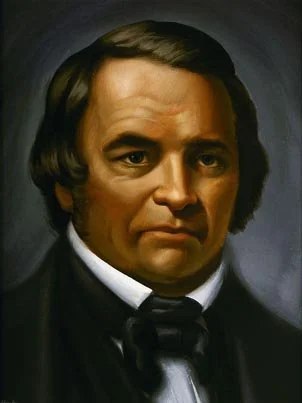
William Miller (1782-1849)
Enter William MIller (1782-1849) who told the public that he had the answer. An American religious enthusiast, leader of a movement called “Millerism” that sought to revive belief that the bodily arrival (“advent”) of Christ was imminent. Miller was a farmer, but he also held such offices as deputy sheriff. In 1831, after years of Bible study he began to preach that the present world would end “about the year 1843.” He based this belief primarily on a passage in the Book of Daniel (8:13-14). He published a pamphlet in 1833 and a book of lectures in 1836, the first of many publications. Principal organs of the Millerite movement were the Signs of the Times (Boston) and the Midnight Cry (New York). Miller estimated that between 50,000 and 100,000 believed in his views. When 1843 passed, some of his associates set Oct. 22, 1844, as the date of the Second Coming. This date brought the movement to a sharp climax. Shortly thereafter, MIller changed the date of the Advent once again; he began to lose followers. By the time of his death in 1849, the Millerite movement had all but disappeared - save for a small but fervent group that still exists today. They call themselves the “Seventh Day Adventists,” and are distinguished by their observance of Saturday as the Sabbath, and their eager anticipation of the literal, visible return of Jesus.
Shortly after Miller’s death and the dissolution of his movement, a new cult masquerading as a political party came on the scene. The “American Party” flourished in the 1850s. It was an outgrowth of the strong anti-immigrant and especially anti-Roman Catholic sentiment that started to manifest itself during the 1840s. A rising tide of immigrants, primarily Germans in the Midwest and Irish in the East, seemed to pose a threat to the economic and political security of native-born Protestant Americans. In 1849, the secret Order of the Star-Spangled Banner formed in New York City, and soon after lodges formed in nearly every other major American city. Members, when asked about their nativist organizations, were supposed to reply that they knew nothing, hence the name by which they are known to history: The “Know Nothings.” As its membership and importance grew in the 1850s, the group slowly shed its clandestine character and took the official name American Party. As a national political entity, it called for restrictions on immigration, the exclusion of the foreign-born from voting or holding public office in the United States, and for a 21-year residency requirement for citizenship.
Ironically, the first leader of this staunchly anti-immigration party was the Jewish Lewis Charles Levin, whose family had emigrated from England to South Carolina shortly before his birth. Sadly, when Levin (1808-1860) passed away, the money his wife Julia had raised in order to bury her husband (who died in an insane asylum) was stolen by the committee’s treasurer. For years, no one knew where Levin was buried.
The “Know Nothings” did manage to elect a handful of their followers to Congress (including Levin) and endorsed former POTUS Millard Fillmore for president in 1856. He wound up receiving 21.5% of the vote, coming in 3rd to Republican John C. Fremont and the eventual winner, Democrat James Buchanan. Before the advent of DJT, historians regularly ranked Buchanan just a step ahead of Warren G. Harding as the worst POTUS in American history.
In the 20th century, cults began receiving tremendous amounts of publicity through the media. Such groups as Synanon, Heaven’s Gate, Branch Davidians, the Manson Family, Jim Jones’ People’s Temple, and others have become known as “mass suicide cults” - their ultimate demise coming when much of their membership had either committed suicide or been sentenced to prison.
The danger that MAGA causes to both America and America’s relations with the rest of the world is real; dangerously real. However, know this: the one thing most every cult has shared throughout history is that they are no longer in existence. Once their supreme leader answers the call of mortality, the group begins its inexorable path to oblivion. About the only positive thing one can say about Felon47 is that he, like Johannes Kelpius, William Miller, Lewis Charles Levin, James Jones, David Koresh, and the rest, is unquestionably mortal.
God bless Dr. Lifton. For not only did he create a new world of understanding; he blessed us all with optimism.
Copyright©2026 Kurt Franklin Stone