
#1,071: Sinclair Lewis: Nobel Prize Laureate, American Prophet
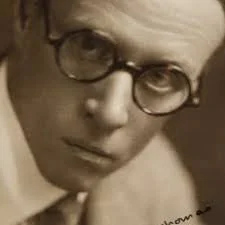
Sinclair Lewis (1885-1951)
In 1930, Harry Sinclair Lewis (1885-1951) became the first of 14 Americans to win the Nobel Prize in literature. Born in the tiny town of Sauk Centre, Minnesota, the son Dr. E.J. Lewis and his wife Emma Kermott Lewis, young Harry, known variously as “Hal and “Red” (for his generally untamed mop of red hair), earned his B.A. at Yale in 1908, and then moved to New York, where he became a book editor and writer of dozens of mostly unread short stories and several long-forgotten novels such a Our Mr. Wren: Adventures of a Romantic Gentleman (1914) and 1917’s The Job, his first overtly political novel - and first to be purchased by the film industry. Even with his relative success, he wondered if he would ever be able to stop editing and earn a living as a full-time author.
His dream was answered in 1920, when the then-tiny firm Harcourt Brace & Howe published Lewis’s Main Street. It would quickly become a publishing phenomenon, the best-selling novel of 1921; indeed, it was the best-selling novel of the 20th century up to that time. What makes this all the more unique is that Main Street is relentlessly cynical in dealing with its subject: small-town America. In the then 35-year-old Lewis’s first great satire, “Gopher Prairie,” the smallish Minnesota town where all the action takes place, is a substitute for the author’s real hometown, Sauk Centre.
Main Street follows the story of Carol Milford, an idealistic and ambitious young woman from Mankato, Minnesota. After completing her education and working briefly as a librarian in Saint Paul, Carol marries Will Kennicott, a small-town doctor. The couple moves to Will's hometown of Gopher Prairie, which, as noted above, is a fictional rural community modeled on Lewis's own hometown.
Upon arriving in Gopher Prairie, Carol is immediately struck by the town's lack of culture and aesthetic charm. Determined to bring about change, she launches various initiatives to improve the town's appearance and cultural offerings. Her efforts, however, are met with resistance and ridicule from the conservative locals. Carol finds herself increasingly at odds with the narrow-mindedness and provincialism of small-town life.
Frustrated by her inability to bring about meaningful change and feeling stifled by the town's conformity, Carol eventually leaves Will and moves to Washington, DC, to work as a government clerk during World War I. After some time away, she returns to her husband. Though she failed to achieve her lofty goals of transforming Gopher Prairie, Carol maintains her ideals and refuses to surrender to the small-town mentality surrounding her.
Lewis’s literary talents and ear for how small-town, Midwestern Americans really sound, are on full display in Main Street. Although widely praised by the most prominent literary reviewers in America, it did have its detractors. Believe it or not, Main Street was actually banned by the public library in Alexandria, Minnesota, due to what his hometown Sauk Centre Herald called “its “unflattering portrayal of small-town life.” What the editorial writer of the Herald was mistaking for Lewis’s “unflattering portrait” was actually something that would run through most of his remaining novels: a critique of American complacency and conformity.
When given the chance to respond to The Herald’s skewering of Main Street, Lewis wrote a surprisingly mild and didactic essay. In it, he supposedly wrote (for it can no longer be found on the Internet) by way of explanation:
“I love America; I don’t always like America.”
(We’ll get back to Sinclair Lewis toward the end of the blog . . . )
Lewis’s reflection - whether he actually wrote it or not - is well worth commenting upon.
I think tons of sensible people can agree that one need not like everything America does or proclaims to be considered either a patriot or “lover of America.” Then too, we do have a sizeable minority here in the Land of the Free and the Home of the Brave who would loudly disagree. Their love and loyalty appear to be to a single man with a single plan, no matter how erratic, volatile, or inconsistent it may be. I couldn’t disagree more. Let me share with you some of the things I absolutely love about America:
I love that the Declaration of Independence, largely the creation of an aristocratic Southern slave owner, begins with the words “We THE PEOPLE.”
I love that America’s greatest president, Abraham Lincoln, was also the most down-to-earth of all our 47 chief executives.
I love that our Constitution created and mandated three coequal branches of government so that ultimate power should rest with the people.
I love that Presidents Ulysses S. Grant, Theodore Roosevelt, and Woodrow Wilson saw fit to preserve, protect, and defend our national treasures by enacting, respectively, the Yellowstone National Park Protection Act (1872), the Antiquities Act (1906), and the Organic Act, which created the National Park Service (1916).
I love that for so many decades, America kept its gates wide open for immigrants to enter, either through Ellis Island (and earlier Castle Garden) to make better lives for themselves and their progeny. (Interestingly, both sides of our family came to America before there was an Ellis Island or Castle Garden. My father’s side entered through Baltimore Harbor, remaining in that city for several generations; my mother’s side likely through Canada, where they settled down (ironically) in St. Paul, Minnesota . . . not too far from Lewis’s Sauk Center.)
I love that President John F. Kennedy created the Peace Corps, the United States Agency for International Development (USAID), and NASA.
I love that America led the battle to save the world from 3 of history’s worst, most diabolical dictators in the 1940s.
I love that in America, when things get as dark, desperate, and depressing as they seem they can, the people tend to gather, garner strength, and get back to work to make things happen. Case in point: since the nation’s chief Ninnyhammer (that’s “moron” in Elizabethan English) returned to office on January 20, 2025, Democrats are 28-0 in taking back Republican-held seats in state legislatures . . . some in districts that our Favorite Fapdoodle won by 10 or more points in 2024.
Then there are things I don’t like about America:
I don’t at all like the growing number of people who accept as gospel such conspiratorial notions that White Christians are in far greater danger than Jews; that millions of illegal immigrants are collecting hundreds of billions of dollars in “freebies,” or casting millions upon millions of illegal votes for Democrats.
I don’t at all like that a small handful of multi-billionaires are buying up the nation’s media so they can skew the truth about virtually everything.
I don’t like that every couple of decades, Americans are convinced that the lion’s share of our economic, cultural, or political difficulties is the fault of immigrants . . . thereby demanding that the gates be shut.
I don’t like that, with few exceptions, members of one political party refuse to speak out against a leader who is obviously in the throes of dementia and urge - let alone even suggest - that the 25th Amendment be put into use.
I don’t like that the sole requirement for service in the current POTUS’ administration is absolute loyalty to him.
I don’t like that America has turned its collective back on the planet’s poorest, hungriest, sickest, and most endangered human beings all for the - supposed - sake of “Making America Great Again.”
I don’t like that people without a shred of professional knowledge have been put in charge of critical, heretofore essential, bureaus and offices to convince people that vaccines cause autism, that raw milk isn’t dangerous, or that alternative energy sources cause cancer.
I really don’t like that so many people online refer to our former FLOTUS, Michelle Obama, as “Big Mike,” and claim she is a transvestite. Yes, we have a First Amendment guaranteeing their right to free speech, but whatever happened to not making a complete jackass out of oneself in public? Oh well, I guess it’s likely due to the Internet’s relative anonymity.
And yet, I can still say with a straight face and a loving heart that I love America.
Now back to Sinclair Lewis . . .
Main Street changed Sinclair Lewis’ life in many ways. First, it gave him his first taste of real money. When the first royalty checks started rolling in, he realized that it would now be possible for him to become a full-time novelist. His agent quickly sold the rights for a stage adaptation to be written. On October 5, 1921, a four-act play debuted at Broadway’s National Theatre. Although it only ran for 86 performances (not a bad run by 1920s standards), Main Street received fine reviews. His agent also sold rights to the newly formed Warner Bros. Starring such stars of the day as Florence Vidor and Noah Berry, and future stars Monte Blue and Alan Hale, it became Warner’s first full-length feature film, and garnered awards for Best Film, Best Actor, and Best Actress for August 1921.
Over the next 7 years, Sinclair Lewis produced 4 additional literary masterpieces, all of which were bestsellers turned into major motion pictures:
1922: Babbitt
1925: Arrowsmith
1927: Elmer Gantry
1929 Dodsworth.
All these novels dealt with aspects of American life, ranging from small-town America and medicine to religious fraud and extra-marital romance. Each benefited from Lewis’s satiric skills, his knack for creating memorable, believable characters, and his felicitous gift of having these characters put words into his pen, rather than he putting words into their mouths.
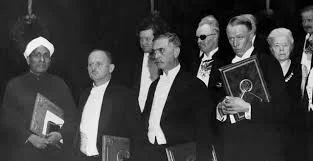
And of course, in 1930, Lewis was awarded the Nobel Prize. In his presentation speech on December 10, 1930, Erik Alex Karlfeldt, Permanent Secretary of the Swedish Academy, noted the wonderful irony that the first American writer to win this most prestigious of prizes should come from a part of the United States that had long been the home to more Swedish “contacts” than anywhere else in the New World. Karlfeldt (who himself would be awarded the Nobel Prize for literature the next year) concluded his address with the words: " You have a special recommendation to Swedish hearts. You were born among our countrymen in America, and you have mentioned them in friendly terms in your renowned books. We are glad to see you here today and glad that our nation has a laurel of its own to bestow on you. And now I ask you to descend with me and receive it from the hand of our King.” (Sinclair Lewis on the right in the photo, holding his Nobel plaque)
In all, Sinclair Lewis wrote 24 novels; the last of which, World So Wide, was published posthumously in 1951. Of his 2 dozen novels, 17 are still in print . . . a truly remarkable accomplishment. To my way of thinking, the most important (though not the best) of the group) is his 1935 dystopian fantasy, It Can’t Happen Here. ( I wrote about this novel in a blog back on July 2, 2012, entitled Buzz Windrip is Alive and Well.) The work is difficult to read in the age of MAGA. It predicts the takeover of America by a demagogue named Berzelius “Buzz” Windrip, who is elected POTUS, after fomenting fear and promising drastic economic and social reforms while promoting a return to patriotism and "traditional" values. Doremus Jessup, a small-town newspaper editor, witnesses and writes about all of this as Windrip defeats FDR in the presidential election and then quickly turns America into an authoritarian state. The new president’s personal troops are called “The Corpos,” who make sure that everything works just the way the new despot, Buzz, wants it to. Doremus Jessup’s moral courage and resistance to the Corpos offer a sobering reflection on the cost of complacency and the importance of vigilance. Here, 90 years after its publication, is Sinclair Lewis’s prophecy . . . unless we all act more like Doremus and less like Buzz we are big, big, big trouble..
I URGE YOU TO READ THIS UNFORGETTABLE BOOK.
Remember: you can love America without always liking her. . .
Copyright©2026 Kurt Franklin Stone